
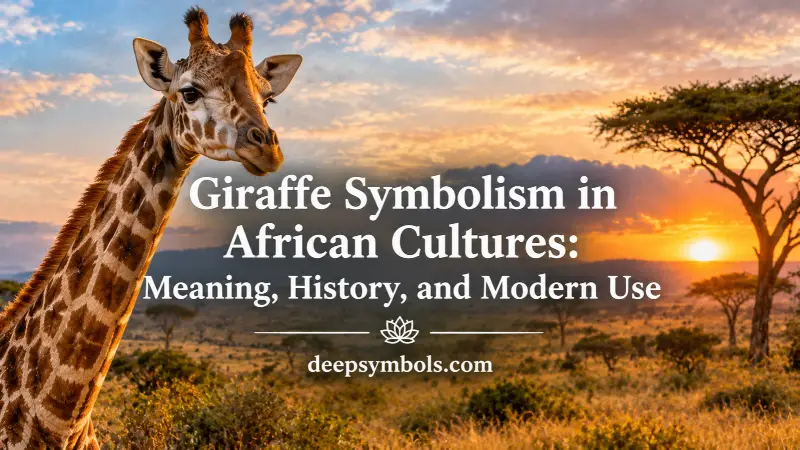
The giraffe stands out for its extraordinary height, long neck, distinctive spotted coat, and calm movements across the African landscape. In giraffe symbolism in African cultures, these physical characteristics can inspire associations with perspective, elegance, patience, and awareness. Yet Africa is home to hundreds of cultural communities, each with its own histories, beliefs, artistic traditions, and relationships with wildlife. The giraffe does not carry one universal meaning across the continent.
For communities living near giraffe habitats, the animal has also been part of the natural environment, appearing in local knowledge, stories, visual art, and relationships with the land. In some settings, its unusual appearance makes it a memorable subject for artistic expression; in others, its significance may be connected to the realities of wildlife, hunting, conservation, or changing landscapes. Specific interpretations depend on the community and the historical context.
In the United States, giraffes are familiar from zoos, children’s books, wildlife documentaries, conservation campaigns, and decorative designs. Americans often associate them with gentleness, individuality, and the ability to see beyond immediate obstacles. Exploring their cultural background helps distinguish these contemporary interpretations from meanings that can actually be established within particular African traditions.
Quick Answer
Giraffe symbolism in African cultures can evoke grace, distinctive beauty, awareness, and a close relationship with the natural world, but meanings vary among communities and should not be treated as universal African beliefs. In modern American culture, giraffes commonly represent perspective, individuality, gentleness, and conservation, while particular African interpretations depend on local histories, stories, and artistic traditions.
TL;DR
- A giraffe’s height makes perspective and awareness natural symbolic associations.
- African communities have diverse traditions rather than one shared giraffe mythology.
- Giraffes appear in African wildlife art, storytelling, and contemporary visual design.
- American culture often associates giraffes with gentleness, uniqueness, and curiosity.
- Conservation connects giraffe imagery with habitat protection and biodiversity.
- Tattoos and home decor give giraffe designs personal meanings today.
1. What Makes the Giraffe a Distinctive Symbol?
The giraffe is the tallest living land animal. Its long neck, slender legs, patterned coat, and distinctive way of moving make it recognizable even in a simplified drawing or silhouette.
These features provide several reasons why people may attach symbolic meanings to it. Its height suggests an expanded field of vision, while its graceful movement can inspire associations with elegance and composure. Its spotted coat also creates a striking visual pattern that artists can adapt to textiles, paintings, jewelry, and decorative objects.
However, an animal’s physical characteristics do not automatically establish a traditional cultural meaning. A modern interpretation of the giraffe as a symbol of foresight, for example, may be an imaginative response to its height rather than a documented belief shared by a particular African community.
The distinction matters when interpreting cultural symbols. An image can have an obvious visual association without carrying the same established meaning in every society.
Giraffes are native to sub-Saharan Africa, although their distribution differs by species and population. They inhabit a range of landscapes, including savannas, open woodlands, and areas where trees provide the leaves they eat. Their presence in these environments has made them important subjects for wildlife observation, artistic representation, and conservation.
2. What the Giraffe Commonly Represents Today
In contemporary art and popular culture, giraffes are frequently associated with several qualities.
Perspective and awareness: A giraffe’s height gives it a distinctive position in its environment. People often interpret this feature as an invitation to look beyond immediate concerns or consider a wider situation.
Grace and elegance: Despite their size, giraffes can move with a measured, fluid gait. Their proportions and posture make them popular subjects in illustrations, sculpture, and decorative design.
Individuality: The distinctive coat pattern of each giraffe encourages comparisons with personal identity. In modern designs, the animal may represent the value of standing out rather than blending into a crowd.
Gentleness: Giraffes are often portrayed as calm, friendly animals in children’s media and family-oriented artwork. This association is partly a product of modern representation and should not be confused with a claim that wild giraffes are harmless in every circumstance.
Connection with nature: Because giraffes depend on functioning African ecosystems, they can symbolize wildlife conservation, ecological diversity, and the importance of protecting natural habitats.
These associations are useful starting points for understanding the giraffe in modern visual culture. They should not automatically be attributed to a specific African religion, ethnic group, or historical tradition without supporting evidence.
3. Giraffes in African Landscapes and Local Knowledge
The giraffe’s cultural significance begins with its place in the African environment. Giraffes live in a number of sub-Saharan countries, including parts of eastern, southern, and central Africa. Their distribution is uneven, and different populations have distinct ecological conditions and conservation histories.
For communities living near giraffe habitats, wildlife can be understood through direct experience as well as through stories and art. Knowledge of animal behavior, seasonal movement, feeding patterns, and the availability of water may form part of a community’s broader understanding of the landscape.
These relationships are not necessarily symbolic in the narrow sense. An animal may be important because it is familiar, visible, economically relevant, or connected to local land-use decisions. Its presence may also become part of a community’s cultural identity through tourism, conservation work, or regional artistic production.
Giraffes browse on leaves from trees and shrubs, especially acacias and other plants suited to their habitats. Their feeding behavior gives them a recognizable ecological role in wooded savannas. In places where wildlife viewing is part of the local economy, giraffes may also represent the value of conserving the environment for future generations.
It is important not to assume that every community living near giraffes regards them in the same way. Local experiences vary according to geography, livelihoods, wildlife management, and historical relationships with the land.
4. Why There Is No Single African Giraffe Symbolism
The phrase “African culture” can hide enormous differences. Africa contains thousands of cultural and linguistic communities, and its artistic and religious traditions cannot be reduced to a single set of beliefs.
A meaning associated with an animal in one community may be unfamiliar in another. Even within a single region, interpretations can change across generations or differ according to whether the animal appears in a folktale, a ritual object, a painting, or a contemporary commercial design.
For this reason, it would be misleading to claim that giraffes universally symbolize wisdom, royalty, protection, prosperity, or spiritual guidance throughout Africa. Such claims are sometimes repeated in popular animal-symbolism writing without enough evidence to identify where the belief originated.
A more reliable approach is to separate three categories:
- Documented local tradition: A meaning supported by identifiable stories, historical objects, or accounts from a particular community.
- Artistic interpretation: A meaning expressed by an individual artist or within a particular visual tradition.
- Modern personal symbolism: A meaning people assign to giraffes today, such as confidence, individuality, or a broader outlook.
All three can be meaningful, but they are not interchangeable. Recognizing the difference allows readers to appreciate African cultural diversity without turning a continent’s many traditions into one generalized mythology.
5. Giraffes in African Rock Art and Visual Traditions
Giraffes appear in some of Africa’s ancient rock-art traditions, offering evidence that people have observed and represented these animals for thousands of years. Rock paintings and engravings in parts of the Sahara and southern Africa include giraffes among depictions of wildlife, people, and scenes connected with earlier ways of life.
These images are valuable records of human relationships with animals and changing environments. They can show which creatures artists considered worth depicting, how they represented their surroundings, and what kinds of visual practices existed in particular places.
However, an image of a giraffe does not automatically reveal what the animal symbolized to its creator. Without a reliable cultural context, it is difficult to determine whether a depiction related to hunting, observation, storytelling, spiritual belief, or another purpose.
This caution is especially important when interpreting prehistoric art. The people who created an image may not have left written explanations, and present-day interpretations cannot always recover their original intentions.
In contemporary African art, giraffes also appear in paintings, carvings, illustrations, textiles, and other decorative works. Artists may emphasize the animal’s unusual proportions, patterned coat, or relationship with the surrounding landscape. Some works draw on regional artistic practices, while others reflect individual creativity, wildlife tourism, or international demand for African-inspired imagery.
The distinction between ancient rock art and contemporary giraffe artwork matters: both demonstrate cultural engagement with the animal, but they do not necessarily share the same symbolism.
6. Giraffes in African Folktales and Storytelling
Animals have important roles in many African storytelling traditions. Stories can communicate social expectations, explain aspects of the natural world, entertain audiences, or explore questions about responsibility, intelligence, pride, and community.
Giraffes may appear in regional stories, but there is no single giraffe-centered folklore tradition shared by all African peoples. The role of the animal depends on the specific story and the community in which it is told.
In any particular tale, a giraffe might be characterized by its appearance, behavior, relationship with other animals, or place within the plot. Its long neck could become a feature of a story about obtaining food or reaching something inaccessible, for example. But such a narrative should be attributed to a documented tradition rather than presented as a continent-wide belief.
This distinction helps avoid a common problem in popular animal symbolism: turning a plausible modern interpretation into an allegedly ancient legend.
When exploring a giraffe story, useful questions include who tells it, where it is recorded, how the story has changed over time, and what role the giraffe plays in the narrative. It is also important to distinguish oral traditions shared within a community from recently invented children’s stories or commercial adaptations.
For modern readers, African storytelling traditions offer a way to appreciate how animals can communicate human concerns. The most accurate interpretation, however, begins with the particular story rather than an assumption that every animal has a fixed symbolic meaning.
7. Giraffes, Spirituality, and Traditional Beliefs
Wild animals may hold religious or spiritual significance in particular societies, but those meanings need to be established through specific cultural evidence. There is no sound basis for claiming that every African spiritual tradition regards the giraffe as a sacred animal or assigns it the same supernatural powers.
African religious traditions are diverse. They include Indigenous spiritual systems, Christianity, Islam, and many forms of religious practice shaped by local histories and cultural exchange. Beliefs about animals vary across these traditions and among the communities that practice them.
A giraffe may appear in an artistic or spiritual context without necessarily being worshiped, regarded as a messenger, or treated as a sacred being. Its presence alone cannot establish the meaning of an object, image, or ceremony.
Likewise, modern claims that a giraffe universally represents divine protection, prophecy, or spiritual awakening should not be presented as established African teachings unless the relevant tradition can be identified and documented.
People today may still find personal spiritual meaning in the animal. A giraffe encountered in nature might prompt reflection on patience, awareness, or the importance of seeing a situation differently. Such an interpretation can be personally meaningful without being attributed to an entire culture.
Respectful interpretation makes room for individual belief while distinguishing it from documented religious traditions.
8. What the Giraffe’s Long Neck Can Represent
The giraffe’s long neck is its most recognizable physical feature, and modern artists often use it as a starting point for symbolic interpretation.
One common association is perspective. Because the giraffe stands higher than many other animals, its silhouette can suggest looking beyond what is immediately visible. In contemporary illustration, this can represent the value of considering a problem from a wider viewpoint.
The neck may also inspire ideas about reaching and aspiration. A giraffe stretching toward leaves can be interpreted as an image of pursuing a goal, adapting to circumstances, or making use of available resources.
A third association is distinctiveness. The giraffe’s unusual proportions make it stand apart from other animals. Artists and designers may use this feature to celebrate individuality, unconventional beauty, or the confidence to be different.
These meanings are interpretations based on the animal’s appearance rather than universal traditional beliefs. They are especially common in modern decorative and motivational contexts, where the giraffe is presented as a friendly image with an easily understood visual message.
The animal’s actual biology adds another dimension. Its neck is adapted to feeding and other aspects of its life, and its height affects how it interacts with its environment. Understanding this natural history helps keep symbolic interpretation grounded in the living animal rather than turning it into an abstract collection of human qualities.
9. Giraffe Symbolism in the United States
In the United States, giraffes are widely recognized through zoos, wildlife programs, children’s books, educational displays, and conservation campaigns. Their distinctive appearance makes them appealing subjects for both scientific education and popular illustration.
Many Americans associate giraffes with gentleness, curiosity, individuality, and a broad outlook. These meanings are especially common in children’s products, classroom decorations, nursery art, and gifts. A giraffe’s height can also make it an accessible visual metaphor for seeing things from another perspective.
The animal has a place in wildlife tourism and conservation messaging as well. Images of giraffes against an African savanna can draw attention to biodiversity, habitat protection, and the value of preserving wildlife populations.
At the same time, American audiences may encounter giraffes in designs described as African-inspired. These products can reflect an appreciation for African wildlife and art, but the label does not establish that the design comes from a particular African cultural tradition.
For consumers, educators, and designers, the distinction is worth considering. A generic giraffe illustration may simply celebrate wildlife, while a design presented as belonging to a named community should be grounded in that community’s actual artistic practices.
The giraffe’s modern American meaning is therefore shaped by education, entertainment, conservation, and personal taste as much as by any particular historical tradition.
10. The Emotional and Psychological Appeal of Giraffes
Giraffes often appear friendly in illustrations because of their large eyes, long eyelashes, distinctive faces, and graceful proportions. Their unusual shape makes them memorable, while their representation in children’s media encourages associations with gentleness and curiosity.
This appeal can be understood through the way people respond to familiar visual cues. Large eyes and rounded facial features are often used in character design to make animals appear approachable. A simplified cartoon giraffe may consequently feel more playful and affectionate than a realistic depiction of a wild animal.
The giraffe’s height can also provide an image of confidence or independence. In a personal design, it might represent a willingness to stand apart, maintain individuality, or look beyond an immediate challenge.
For some people, the animal carries memories of childhood visits to zoos, family trips, favorite books, or experiences in nature. These associations can be more personally important than any general symbolic interpretation.
It is useful to remember that emotional responses are not universal. Someone who associates giraffes with childhood comfort may interpret the animal differently from a wildlife researcher, an artist from a giraffe-range community, or a conservation worker.
The giraffe’s emotional meaning develops through both its physical appearance and the experiences people attach to it.
11. Giraffes in Tattoos, Jewelry, and Personal Style
Giraffe imagery appears in tattoos, pendants, earrings, clothing, and other forms of personal design. People choose the animal for different reasons, and no single interpretation applies to everyone who wears it.
A small giraffe tattoo may commemorate a childhood memory or express affection for wildlife. A larger design incorporating a savanna landscape may reflect an interest in African ecosystems, conservation, or travel. A stylized giraffe with exaggerated proportions may emphasize humor, creativity, or individuality.
Some people use the giraffe’s height as a personal metaphor for broad perspective or looking beyond immediate difficulties. Others simply appreciate its distinctive spotted coat and elegant shape.
Jewelry can carry similarly varied meanings. A giraffe pendant might serve as a reminder of a meaningful trip, a gift between family members, or an expression of a person’s interest in animals.
When a design incorporates recognizable African patterns or motifs, its cultural origin deserves attention. African artistic traditions are not interchangeable, and a specific motif may have a history that goes beyond its decorative appearance. A generic giraffe illustration should not be described as a traditional symbol of a particular community without evidence.
Ultimately, the most reliable way to understand a giraffe tattoo or accessory is to consider the owner’s intentions and the specific design rather than assume a fixed meaning.
12. Giraffe Symbolism in Home Decor, Fashion, and Design
The giraffe’s distinctive pattern and silhouette make it a popular subject in home decor and visual design. Its image appears on wall art, children’s bedding, cushions, lamps, figurines, stationery, and clothing.
In a nursery or child’s bedroom, a giraffe may communicate playfulness, curiosity, and an interest in wildlife. In a living room, a sculptural giraffe or patterned artwork can serve as a focal point because of its unusual proportions.
Designers may also use giraffe spots as a repeating pattern. Although the pattern resembles the animal’s coat, it should not automatically be described as a traditional African textile design. Animal-inspired patterns and regional textile traditions have distinct histories, even when contemporary products combine them.
In fashion, giraffe imagery can suggest a connection with nature, an adventurous style, or a preference for unusual prints. In commercial branding, the animal may be used to create a friendly and memorable identity.
These applications illustrate how the giraffe has become part of a broad visual vocabulary. Its meanings in modern products usually come from design choices and audience expectations, rather than from one inherited cultural definition.
When a product claims to represent a particular African heritage, consumers can look for information about the artist, community, and design tradition involved.
13. Giraffes, Wildlife Conservation, and African Identity
Giraffes have become recognizable symbols in international conservation efforts, particularly because their survival depends on protecting the ecosystems in which they live. Habitat loss, illegal hunting, and other human pressures affect giraffe populations in different ways across their range.
Conservation organizations use giraffe imagery to introduce audiences to African biodiversity and encourage support for wildlife protection. For many Americans, a giraffe in a conservation campaign represents the need to preserve natural habitats and protect animals for future generations.
Within African countries, giraffes may also be connected with national parks, wildlife tourism, local employment, and community-based conservation initiatives. These relationships are practical as well as cultural. Wildlife can support livelihoods, but conservation decisions can also affect communities whose land use and economic opportunities overlap with animal habitats.
This context complicates the simple idea that giraffes symbolize harmony with nature. Protecting wildlife requires more than admiration for beautiful animals. It can involve difficult decisions about land, agriculture, tourism, infrastructure, and the distribution of conservation benefits.
Giraffe imagery can therefore represent both the beauty of African wildlife and the responsibility to protect it. A meaningful conservation message recognizes the people who live alongside wildlife rather than treating African landscapes as empty wilderness.
14. Misunderstandings and Cultural Misuse of Giraffe Symbolism
One of the most common misunderstandings is the assumption that every animal has a single spiritual meaning shared throughout Africa. This approach overlooks the continent’s many languages, histories, religions, and artistic traditions.
Another problem arises when modern interpretations are presented as ancient African beliefs without identifying a source community. Claims that giraffes universally represent royalty, good fortune, divine messages, or spiritual protection may sound appealing, but they should not be treated as established cultural facts without reliable evidence.
Commercial imagery can contribute to this confusion. Products marketed as traditionally African may combine animal patterns, colors, and motifs from different places—or use newly invented designs that have no specific historical connection to Africa.
This does not mean that contemporary artists cannot create new interpretations of the giraffe. Creative symbolism evolves, and artists are free to develop personal meanings. The important distinction is between an original interpretation and a claim about an existing cultural tradition.
A respectful approach involves identifying the origin of a specific story or design when possible, recognizing the artist or community responsible for it, and avoiding claims that one interpretation represents an entire continent.
The giraffe can be appreciated as a beautiful African animal without inventing a cultural history for it. Accurate descriptions make its real ecological and artistic significance more interesting, not less.
15. How Giraffe Symbolism Continues to Evolve
The giraffe’s meaning changes as people encounter the animal in new settings. In areas where giraffes live, their significance may be shaped by local wildlife, land use, art, and community experience. Elsewhere, people may know them primarily through photographs, zoos, documentaries, or decorative products.
Modern media have made giraffes familiar to audiences far beyond Africa. Children’s books often portray them as friendly companions, while wildlife documentaries emphasize their biology and behavior. Conservation campaigns present them as part of a larger effort to protect African ecosystems.
Artists and individuals continue to develop additional meanings. A giraffe may symbolize confidence in one design, environmental responsibility in another, and a personal memory in a third. These interpretations can coexist because symbolism is influenced by context.
Digital communication has also made animal imagery easier to share. Giraffe illustrations appear in online profiles, stickers, memes, and social media posts, where they may communicate humor, affection, or individuality without a specific historical meaning.
The result is not a single replacement for traditional African interpretations. Instead, contemporary meanings exist alongside regional artistic traditions and the real-world significance of giraffes as wildlife.
Understanding this evolution requires keeping cultural history, personal interpretation, and popular imagery distinct while recognizing how each contributes to the animal’s place in modern life.
Comparing Giraffe Meanings Across Different Contexts
| Context | Common interpretation | Important distinction |
|---|---|---|
| African wildlife and local environments | Connection with the natural world and regional biodiversity | Local relationships differ by community and habitat. |
| African rock art | Representation of wildlife and past environments | The exact meaning of an individual image may be unknown. |
| Modern American culture | Gentleness, individuality, curiosity, and perspective | These are popular associations, not universal African traditions. |
| Conservation campaigns | Wildlife protection and habitat preservation | Conservation also involves local communities and land-use decisions. |
| Tattoos and personal design | Personal memories, uniqueness, or affection for animals | The owner’s intention determines the individual meaning. |
FAQs
1. What does a giraffe symbolize in African cultures?
Giraffes can inspire associations with wildlife, distinctive beauty, and the natural environment, but there is no single meaning shared by all African cultures. A specific traditional interpretation should be connected to an identifiable community, story, or artistic practice.
2. Is the giraffe a sacred animal in African traditions?
There is no basis for describing the giraffe as universally sacred throughout Africa. Particular communities may have specific beliefs about wildlife, but those beliefs need to be understood within their own cultural and religious contexts.
3. What does a giraffe symbolize spiritually?
In contemporary personal spirituality, people may interpret a giraffe as a reminder to gain perspective, remain patient, or look beyond immediate problems. These are personal interpretations rather than universal spiritual teachings established across African traditions.
4. What does a giraffe tattoo mean?
A giraffe tattoo may represent individuality, curiosity, a love of wildlife, or a meaningful personal memory. Its meaning depends on the design and the person wearing it, rather than on a fixed symbolic definition.
5. Why are giraffes associated with wisdom and perspective?
Their height makes the giraffe a natural visual metaphor for seeing beyond immediate surroundings. The association with wisdom and perspective is common in modern symbolic interpretation, but it should not automatically be attributed to a specific ancient African belief.
6. What do giraffes represent in American culture?
In the United States, giraffes commonly appear as friendly symbols of gentleness, uniqueness, curiosity, and wildlife appreciation. Their popularity in children’s media, zoos, home decor, and conservation campaigns helps shape these associations.
7. Do giraffes appear in African folklore?
Giraffes may appear in regional storytelling traditions, but African folklore is highly diverse and does not have one universal giraffe narrative. Claims about a particular story should identify its cultural setting rather than present it as representative of the entire continent.
Conclusion
Giraffe symbolism in African cultures reflects the diverse relationships between people, animals, history, and the natural world. The giraffe’s extraordinary height and distinctive appearance have inspired different interpretations, while archaeological evidence shows that the animal also held a place in particular historical and artistic traditions. Loretta Kilroe’s research, “Giants of the Sands: The Giraffe and Its Place in Symbolic Vocabulary in the Kingdom of Kush, Sudan,” examines giraffe imagery in ancient Sudan and the wider Middle Nile region, offering valuable context for understanding how the animal appeared in cultural expression.
In modern American culture, the giraffe may represent perspective, grace, individuality, or a connection with African wildlife. These contemporary interpretations should remain distinct from the specific beliefs and practices of African communities, whose traditions vary across regions and generations.
Ultimately, giraffe symbolism in African cultures is best understood through historical evidence, cultural context, and respect for the communities connected to each tradition. The giraffe can inspire people to look beyond familiar perspectives, appreciate the complexity of the natural world, and recognize that an animal’s meaning is shaped by more than its appearance. Its symbolism becomes most meaningful when curiosity is balanced with cultural accuracy and a willingness to understand the stories behind the image.


