
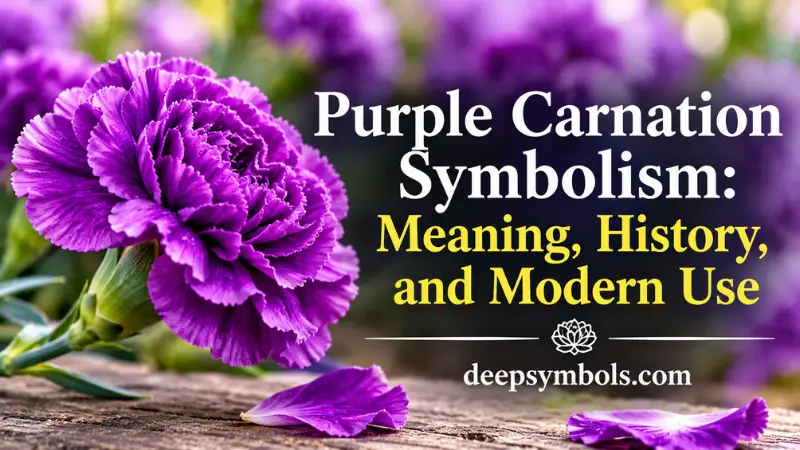
Purple carnations are distinctive flowers associated with admiration, dignity, individuality, and affection. Their ruffled petals and rich colors make them popular in floral arrangements, gifts, weddings, and decorative displays. Purple carnation symbolism is especially interesting because it combines the traditional meanings of carnations with the cultural associations of purple, a color long connected with prestige, creativity, and individuality.
Unlike red carnations, which are commonly associated with romantic love, purple varieties often communicate appreciation, fascination, and a sense of distinction. Their meaning can also depend on the shade. Pale lavender carnations may suggest gentleness and grace, while darker purple varieties can create a more formal impression.
In the United States, purple carnations appear in bouquets, celebrations, personal gifts, and floral designs. They are not tied to one universally recognized occasion, which gives people considerable freedom to choose them for personal reasons. Understanding their symbolism involves looking at the flower’s history, the cultural meaning of purple, and the emotions people associate with different carnation colors.
Quick Answer
Purple carnation symbolism commonly represents admiration, distinction, individuality, fascination, and affectionate appreciation in modern American culture. Historically, carnations have been associated with love, remembrance, and celebration, while purple has carried connections with dignity, prestige, creativity, and spiritual reflection.
TL;DR
- Purple carnations commonly represent admiration, fascination, and individuality.
- Purple traditionally carries associations with dignity, prestige, and creativity.
- Carnations have a long history in European floral traditions.
- Lavender shades suggest gentleness, while darker purple creates a formal impression.
- Modern bouquets use purple carnations for appreciation and distinctive celebrations.
- Their meaning depends on the relationship, occasion, and accompanying flowers.
1. What Does a Purple Carnation Look Like?
The carnation, botanically known as Dianthus caryophyllus, is recognized by its layered petals and slightly ruffled appearance. Its flowers grow on upright stems with narrow, green leaves, making them suitable for bouquets and decorative arrangements.
Purple carnations range from soft lavender and lilac to violet, plum, and deep purple. Some have nearly uniform coloring, while others display lighter edges or subtle variations across their petals.
Their visual character contributes to their symbolic appeal. The layered petals create an impression of fullness and refinement, while the purple coloring makes the flower stand out among more familiar red, pink, and white carnations.
Florists use purple carnations in mixed bouquets, formal arrangements, table decorations, and gifts. Their appearance works particularly well with white roses, lavender flowers, greenery, and other cool-toned blooms.
The exact shade matters because color influences perception. A pale lavender carnation can feel gentle and romantic, while a deep violet variety may appear more dramatic and sophisticated.
2. The Main Symbolic Meanings of Purple Carnations
Purple carnations do not have one universally established symbolic definition. Their meaning is usually interpreted through the combination of carnation traditions and the cultural associations of purple.
Admiration: A purple carnation can communicate respect for someone’s character, achievements, or individuality. It makes a thoughtful choice when ordinary expressions of appreciation feel insufficient.
Fascination: The unusual color gives the flower an association with curiosity and attraction. It can represent interest in someone whose personality or qualities stand out.
Dignity: Purple has historically been connected with prestige and authority. Combined with the carnation’s full appearance, it can create an impression of refinement and self-respect.
Individuality: Purple carnations are less conventional than traditional red or pink varieties. Their distinctive appearance makes them suitable for expressing originality and personal taste.
Affection: Although they are not the most traditional romantic carnation, purple varieties can communicate warmth and appreciation within relationships.
Creativity: Purple is frequently associated with imagination and artistic expression. A purple carnation can therefore complement gifts or arrangements intended for creative individuals.
These meanings are interpretive rather than a fixed historical code. A bouquet given to a friend may communicate admiration, while the same flower used at a formal celebration may emphasize elegance and distinction.
3. The Historical Origins of Carnation Symbolism
Carnations have a long history of cultivation, particularly around the Mediterranean. The species Dianthus caryophyllus has been grown for ornamental purposes for more than 2,000 years, although its exact early history is difficult to reconstruct.
The genus name Dianthus comes from Greek words associated with divinity and flowers. Theophrastus, an ancient Greek philosopher and naturalist, is traditionally credited with introducing the name. Carnations were valued for their appearance and fragrance and became established in European gardens.
Their symbolic associations developed alongside their popularity. In European traditions, carnations appeared in religious artwork, celebrations, courtship, and decorative arrangements. Their associations included beauty, affection, distinction, and remembrance.
Purple was not always a common flower color in historical carnation varieties. Modern breeding expanded the range of available colors and created more options for florists and gardeners.
This distinction matters when interpreting purple carnations. Their modern meanings are influenced by both the older symbolism of carnations and the broader cultural associations of purple. Not every meaning attached to today’s varieties can be traced to an ancient tradition.
4. Purple Carnations in the Victorian Language of Flowers
The Victorian era helped popularize floriography, the practice of communicating emotions through flowers. During the nineteenth century, flower dictionaries became fashionable, allowing people to send carefully selected bouquets as indirect messages.
Carnations had different meanings depending on their colors and patterns. Red carnations could communicate admiration, pink carnations were associated with gratitude and fascination, and white varieties represented innocence and affectionate devotion.
Purple carnations had a less straightforward historical interpretation. Some Victorian flower dictionaries associated them with capriciousness, meaning unpredictability or changeable behavior.
This historical association differs from many modern descriptions of purple carnations as symbols of dignity and individuality.
The distinction is important because contemporary flower meanings are sometimes presented as if they have remained unchanged for centuries. In reality, floriography varied between publications, countries, and periods.
A person choosing a purple carnation today generally does not intend to communicate unpredictability. Nevertheless, the Victorian interpretation adds an interesting historical dimension to the flower’s story.
It also illustrates how floral symbolism changes as social customs and expectations evolve.
5. What Purple Represents Across Cultures
The color purple contributes considerably to the flower’s symbolic meaning. Its associations developed through different cultural traditions, particularly because purple dyes were historically difficult and expensive to produce.
In ancient Mediterranean societies, certain purple dyes were associated with wealth and authority. The famous Tyrian purple, produced from marine mollusks, required considerable labor and became a prestigious color in parts of the ancient world.
As a result, purple acquired associations with royalty, status, and distinction.
Other interpretations developed over time:
- European traditions: Purple became associated with royalty, dignity, and formal occasions.
- Christian traditions: Purple is used in certain liturgical seasons, particularly Advent and Lent, where it can signify preparation, repentance, and reflection.
- Modern Western culture: Purple frequently communicates creativity, originality, individuality, and artistic expression.
- Contemporary fashion: Purple can suggest sophistication, unconventional taste, or a preference for distinctive design.
These associations do not create one universal interpretation. In different societies, purple can carry different emotional, religious, and ceremonial meanings.
When combined with a carnation, the color gives the flower a more distinctive character than traditional red or pink varieties.
6. Purple Carnation Symbolism in the United States
In the United States, purple carnations are primarily understood through contemporary floral conventions rather than a single national tradition.
They are used in bouquets for birthdays, celebrations, appreciation, and personal milestones. Their unusual color makes them suitable for people who prefer something different from conventional red roses or pink carnations.
Purple also has a place in American celebrations and public life. It appears in graduation decorations, artistic events, formal floral arrangements, and designs intended to communicate individuality.
The flower can serve several purposes:
For friends: A purple carnation can communicate appreciation, respect, and admiration without suggesting romantic commitment.
For family members: It can express affection and recognition, particularly when included in a personalized bouquet.
For professional occasions: Its refined appearance makes it suitable for congratulations, retirement celebrations, and recognition of achievements.
For romantic relationships: It can communicate fascination or distinctive affection, especially when paired with flowers carrying more traditional romantic meanings.
Unlike the red carnation’s established association with affection, purple varieties have a more flexible contemporary identity. This makes them useful when someone wants to communicate appreciation without relying on conventional floral messages.
7. Purple Carnations and Different Shades of Purple
Not all purple carnations create the same impression. Their shade can influence how people interpret the arrangement.
<
These interpretations are contemporary associations rather than official botanical or historical definitions. Personal taste and the occasion remain important when selecting a particular shade.
8. The Emotional and Psychological Meaning of Purple Carnations
Flowers can communicate feelings without requiring an elaborate explanation. Their colors, fragrance, texture, and arrangement all influence the emotional impression they create.
Purple carnations often appeal to people who want to express appreciation in a distinctive way.
Their emotional associations include:
Feeling appreciated: Receiving an unusual flower can make someone feel recognized for qualities that others may overlook.
Individual expression: Purple carnations may appeal to people who prefer unconventional colors or artistic designs.
Emotional sophistication: Their color can create a more restrained and formal impression than brighter romantic flowers.
Gentle affection: Lavender and lilac shades can communicate warmth without appearing overly dramatic.
Confidence and self-respect: Purple’s association with prestige and distinction can make the flower a suitable representation of personal achievement.
Color psychology should be interpreted carefully. There is no universal psychological rule that determines how every person responds to purple. Personal experiences, cultural background, and individual preferences influence emotional reactions.
For one person, a purple carnation may represent a cherished friendship. For another, it may recall a family celebration or a meaningful relationship.
Its emotional meaning often comes from the occasion and the person giving or receiving it.
9. Purple Carnations in Romantic Relationships
Although red roses and red carnations are more conventional romantic flowers, purple carnations can communicate a different kind of affection.
Their associations with fascination and admiration make them suitable for expressing interest in someone’s personality, creativity, or individuality.
They can also be included in bouquets celebrating anniversaries, engagements, and personal milestones.
A purple carnation arrangement may be particularly appropriate when the relationship is based on appreciation and companionship rather than dramatic romantic gestures.
Combining purple carnations with other flowers can make the intended message clearer:
- Purple carnations with red roses can suggest admiration alongside romantic affection.
- Purple carnations with pink roses can create a softer expression of warmth and appreciation.
- Purple carnations with white lilies can produce a refined arrangement suitable for formal celebrations.
- Purple carnations with lavender flowers can emphasize a gentle, coordinated color palette.
There is no universal rule governing these combinations. Their meaning depends on the giver’s intentions and the recipient’s understanding of the flowers.
10. Purple Carnations for Friendship and Appreciation
One of the most practical uses of purple carnations is expressing appreciation toward friends and people who have made a positive difference in someone’s life.
Their color distinguishes them from the more familiar red and pink flowers commonly associated with romantic love.
A bouquet of purple carnations can be an appropriate gift for:
- A close friend celebrating a birthday.
- Someone who has achieved an important personal goal.
- A mentor who has provided valuable guidance.
- A colleague receiving recognition.
- A family member celebrating a meaningful milestone.
The flower’s association with individuality also makes it suitable for someone who enjoys distinctive colors or creative arrangements.
In American gift-giving culture, flowers are often selected according to personal taste rather than strict symbolic rules. Purple carnations offer a way to give something recognizable but less conventional.
11. Purple Carnations in Weddings and Celebrations
Purple carnations can add color and visual texture to weddings, anniversaries, graduations, and other celebrations.
Their layered petals create fullness in arrangements, while their color works with several popular decorative palettes.
For weddings, lavender and lilac carnations can complement white roses, greenery, and pale-colored decorations. Darker varieties may work better with formal arrangements featuring burgundy, ivory, or deep green.
Their contemporary associations with admiration, distinction, and individuality make them suitable for celebrations that emphasize personal relationships.
Purple carnations can also be used in graduation bouquets. Their distinctive color offers an alternative to traditional arrangements while expressing recognition of effort and achievement.
For anniversaries, they can represent appreciation for the qualities that make a relationship distinctive.
However, purple carnations do not have a universally established wedding or anniversary meaning. Couples can choose them because of their appearance, personal memories, or preferred color scheme.
12. Purple Carnations in Tattoos, Jewelry, and Modern Design
Floral imagery has a long history in personal decoration, and carnations offer several visual features that make them suitable for tattoos and artistic designs.
A purple carnation tattoo may represent admiration, individuality, affection, or an important personal relationship.
Some people choose the flower because it represents a birth month. The carnation is the traditional birth flower for January, making a purple variety a possible personalized design for someone born during that month.
Other popular uses include:
Floral tattoos: A purple carnation can be combined with leaves, butterflies, dates, or names to represent personal memories.
Jewelry: Carnation-inspired pendants and floral accessories can communicate affection or appreciation.
Home decor: Purple floral artwork, printed fabrics, and decorative arrangements can create a refined or creative atmosphere.
Fashion: Carnation patterns appear in clothing, accessories, and fabric designs, particularly in romantic or vintage-inspired styles.
Social media: Photographs of purple carnations may accompany messages about friendship, birthdays, appreciation, and personal celebrations.
The meaning of a modern floral design does not necessarily follow historical flower dictionaries. Personal experiences frequently determine why someone chooses a particular flower.
13. Cross-Cultural Associations of Carnations
Carnations appear in several cultural traditions, although their meanings differ by region, color, and historical context.
In parts of Europe, carnations became associated with religious ceremonies, courtship, celebrations, and national identity. Spain and Monaco, for example, recognize the carnation as their national flower.
In Portugal, red carnations have a particularly important political association. They became closely connected with the Carnation Revolution of 1974, when the military-led movement that ended the authoritarian regime became associated with carnations placed in soldiers’ rifle barrels.
This historical association primarily concerns red carnations, not purple varieties.
In some European traditions, carnations also appear in celebrations and commemorative events. Their meanings can include affection, respect, and remembrance.
In modern international floristry, carnations are cultivated and traded widely, allowing varieties of different colors to circulate across cultural boundaries.
Purple carnations do not have one universally accepted religious or cultural meaning. Their interpretation often depends on local flower customs and contemporary color associations.
Understanding these differences prevents the mistaken assumption that a flower communicates the same message everywhere.
14. Common Misunderstandings About Purple Carnation Symbolism
Several misconceptions can create confusion about the flower’s meaning.
Every purple carnation represents royalty. Purple has historical connections with prestige and authority, but a purple carnation does not automatically communicate royal status.
Purple carnations have always represented admiration. Victorian flower dictionaries sometimes associated purple carnations with capriciousness. Modern interpretations are not identical to historical ones.
The flower always represents romantic love. Purple carnations can communicate appreciation, friendship, fascination, or individuality without suggesting a romantic relationship.
Dark purple flowers always represent sadness. Dark shades may create a dramatic or formal impression, but they do not have an automatic association with grief.
Every flower color has a fixed meaning. Floral symbolism changes across cultures and historical periods. Personal intention is often more important than a dictionary definition.
These distinctions make it easier to understand the flower without treating symbolic interpretations as universal rules.
15. How Purple Carnation Meaning Has Changed Over Time
The symbolism of purple carnations reflects changes in horticulture, color availability, social customs, and floral communication.
Originally, carnations were cultivated primarily in Mediterranean regions and developed associations with beauty, celebration, and distinction.
European gardening traditions expanded the range of cultivated varieties. By the nineteenth century, flower dictionaries gave different carnations specific emotional meanings, including interpretations based on their colors.
Purple carnations acquired associations with changeable behavior in some Victorian traditions. At the same time, the broader cultural significance of purple continued to connect it with prestige and individuality.
Modern horticulture expanded the range of available carnation colors, making purple varieties more accessible to florists and consumers.
Today, people are less likely to follow strict Victorian flower dictionaries when choosing a bouquet. Instead, they consider color, appearance, occasion, and personal preference.
The result is a flexible modern interpretation in which purple carnations can represent admiration, creativity, affection, and distinction.
FAQs
1. What does a purple carnation symbolize spiritually?
Purple carnations can represent individuality, dignity, admiration, and reflection when interpreted through modern color symbolism. However, there is no universally established religious meaning specifically assigned to purple carnations.
2. Are purple carnations a symbol of love?
They can represent affection and fascination, particularly when given to someone whose personality is admired. They are generally less directly associated with romantic love than red carnations.
3. What does a purple carnation mean in the Victorian language of flowers?
Some Victorian flower dictionaries associated purple carnations with capriciousness, or unpredictable behavior. Modern interpretations often differ, emphasizing admiration and individuality instead.
4. Are purple carnations appropriate for birthdays?
Yes. They make distinctive birthday gifts, especially for people who enjoy unusual flowers or purple decorations. They can communicate appreciation, affection, and recognition of someone’s individuality.
5. What does a purple carnation tattoo mean?
A purple carnation tattoo may represent admiration, creativity, individuality, or a meaningful relationship. It can also serve as a January birth-flower tattoo or a personal memorial design.
6. What is the difference between lavender and dark purple carnation symbolism?
Lavender carnations are often associated with gentleness, grace, and tenderness, while darker purple varieties suggest dignity, distinction, and sophistication. These are contemporary interpretations rather than fixed historical definitions.
7. Are purple carnations suitable for funerals?
They can be included in funeral and memorial arrangements when their colors suit the family’s preferences and the occasion. Their associations with dignity, remembrance, and personal appreciation can make them appropriate, although local customs should guide the choice.
Conclusion
Purple carnation symbolism brings together admiration, individuality, dignity, fascination, and affectionate appreciation. Its meanings combine the traditional associations of carnations with the cultural significance of purple, which is often connected with elegance, distinction, and creativity. The Shakespeare Birthplace Trust’s historical exploration of carnations explains how Victorian flower dictionaries gave purple carnations a more unusual meaning: capriciousness, reflecting the changing nature of historical floral language.
In modern American culture, purple carnations can be used in birthday bouquets, friendship gifts, weddings, tattoos, and decorative arrangements. Their meanings are flexible and personal, allowing people to express appreciation, celebrate individuality, or recognize someone whose character stands apart. These contemporary interpretations need not follow every convention of Victorian flower symbolism.
Ultimately, purple carnation symbolism reminds us that flowers can communicate admiration and affection in distinctive ways. Whether chosen for their unusual color, historical associations, or personal significance, purple carnations offer a thoughtful way to celebrate individuality and meaningful relationships. Their lasting appeal lies in their ability to make a simple floral gesture feel personal, memorable, and sincere.


