
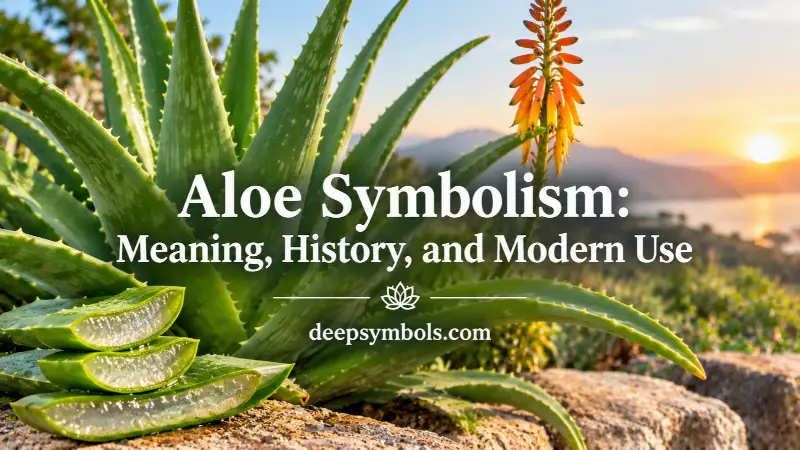
Aloe symbolism centers on healing, protection, resilience, and renewal. Known for its thick green leaves and soothing gel, aloe vera has been used in traditional remedies for centuries. Its ability to store water and survive in dry conditions also makes it a fitting symbol of endurance and self-preservation.
In modern American culture, aloe is familiar in a different way. Many households keep an aloe vera plant on a windowsill, use aloe-based skincare products, or associate the plant with relief after spending time in the sun. These everyday experiences have helped connect aloe with comfort, care, and practical well-being.
Yet aloe’s story reaches much further back than modern skincare. The plant has a long history in traditional medicine, beauty practices, and cultural beliefs across several regions. Ancient Egyptian accounts and later Greek, Roman, and Asian medical traditions help explain how aloe became associated with preserving health and maintaining vitality.
Its symbolism is not identical everywhere, however. Some meanings arise from historical beliefs, while others come from the plant’s physical characteristics and contemporary uses. Understanding the distinction reveals why aloe remains a recognizable emblem of care, resilience, and renewal.
Quick Answer
Aloe symbolism commonly represents healing, protection, resilience, and renewal in modern American culture, particularly through its association with skincare, home remedies, and plant care. Historically, aloe was valued in several ancient medical traditions and became associated with vitality and preservation, including the Egyptian epithet “plant of immortality.”
TL;DR
- Aloe represents healing, comfort, and the restoration of well-being.
- Its ability to survive dry conditions suggests resilience and endurance.
- Ancient Egyptian traditions associated aloe with vitality and preservation.
- Aloe plants can symbolize protection, care, and practical self-reliance.
- Modern American culture connects aloe with skincare and natural wellness.
- Its symbolism reflects cultural beliefs as well as its physical qualities.
What the Aloe Plant Looks Like and Why It Matters
Aloe vera is a succulent with thick, fleshy leaves arranged in a rosette. The leaves usually grow upward and outward, have pointed tips, and feature small teeth along their edges. Their interiors contain clear, water-rich gel, while the outer leaf tissues produce a bitter yellow exudate.
The plant’s appearance helps explain several of its symbolic associations. Its substantial leaves store water, allowing it to withstand periods of limited rainfall. This physical adaptation provides a natural basis for interpreting aloe as a symbol of endurance and resourcefulness.
The gel inside its leaves has also contributed to the plant’s reputation. Aloe gel is used in a variety of cosmetic products and has a history of traditional topical application. As a result, people often associate the plant with comfort, skin care, and recovery.
Even its pointed edges add an interesting dimension. Aloe combines a useful, moisture-rich interior with a protective-looking exterior. As a metaphor, it can represent kindness supported by boundaries: caring for others while also protecting one’s own well-being.
These interpretations are not ancient rules that govern every depiction of aloe. They are meanings that emerge naturally from the plant’s observable characteristics.
The Core Meanings of Aloe Symbolism Today
Several themes recur in contemporary interpretations of aloe.
Healing and recovery are among the most recognizable. Aloe gel is familiar in personal-care products, so the plant often suggests soothing discomfort and supporting the process of recovery. Symbolically, this can extend beyond physical care to emotional restoration after a demanding experience.
Protection is another common association. Aloe’s pointed leaf margins resemble a natural defense, while its reputation as a household remedy connects it with looking after oneself and one’s family.
Resilience comes from the plant’s ability to store water and persist in challenging environments. It can represent maintaining strength when resources are limited, adapting to changing circumstances, or continuing after a setback.
Renewal reflects both the plant’s growth and its modern association with self-care. Fresh leaves and new shoots can suggest a fresh start, while tending an aloe plant offers a simple reminder that growth requires suitable conditions and attention.
Finally, aloe can represent practical wisdom. Rather than relying on dramatic flowers or elaborate displays, it survives through specialized adaptations that serve a clear purpose.
Together, these associations make aloe a symbol of care that is both gentle and capable.
Why Aloe Became a Symbol of Healing
Aloe’s association with healing developed through its practical use long before modern skincare products became commonplace.
People in several historical societies used aloe preparations for skin conditions and other purposes. Egyptian, Greek, Roman, and Asian medical traditions included references to substances identified as aloe, although historical names do not always establish precisely which modern species was involved.
The plant’s clear inner gel is especially important to its contemporary reputation. It became a familiar ingredient in products intended to soothe and moisturize skin, helping connect aloe with comfort and physical care.
This history shaped its symbolic meaning. When a plant is repeatedly used in household care, its image can become associated with the person who provides that care. Aloe consequently suggests attention, reassurance, and practical help rather than simply the abstract idea of health.
The symbolism also has limits. Traditional use does not prove that aloe cures every condition for which it has been recommended. Modern medical evidence varies according to the preparation and intended use, and some forms of aloe can cause adverse effects.
As a symbol, however, aloe’s relationship with care remains understandable: people have turned to it for generations when seeking practical ways to look after the body.
Aloe in Ancient Egypt: Vitality and Preservation
Aloe is often described in modern botanical writing as the Egyptian “plant of immortality.” This familiar epithet expresses the plant’s historical association with vitality and preservation, although popular accounts sometimes present the phrase more confidently than the surviving evidence warrants.
Ancient Egypt developed extensive traditions surrounding medicine, cosmetics, funerary practices, and the preservation of the body. Plants and resins held practical and ritual importance in these settings, and aloe appears in accounts of the region’s historical plant use.
Its reputation as a useful plant helps explain why later writers connected it with continued life and preservation. A plant that could endure dry conditions and had recognized practical applications was a natural subject for interpretations involving vitality.
However, not every modern story about aloe in ancient Egypt is equally well documented. Popular claims that a particular queen used aloe in an exact beauty routine, or that the plant was universally understood as a symbol of immortality, should be treated cautiously unless supported by specific historical evidence.
The broader association is more defensible: aloe’s traditional uses encouraged a connection between the plant and the maintenance of life, health, and bodily well-being.
In modern symbolism, that historical reputation makes aloe an appealing emblem of longevity, continued vitality, and care that extends beyond a single moment.
Aloe in Greek, Roman, Indian, and Chinese Traditions
Aloe’s historical use extended across several regions, although the precise species and preparations varied.
Greek and Roman medical writers described aloe preparations in connection with bodily ailments. In these traditions, aloe had practical medicinal value, particularly in preparations made from its bitter leaf exudate. The plant was therefore associated more directly with treatment and bodily maintenance than with a single abstract symbolic meaning.
Indian medical traditions also have a long history of using aloe in preparations for different purposes. In contemporary Indian contexts, the plant is commonly recognized through its traditional name kumari or related regional names, and it appears in herbal and cosmetic practices. Its connection with care and vitality is understandable within this history, though specific symbolic meanings depend on the tradition.
Chinese medicinal traditions also incorporated aloe into their broader knowledge of medicinal substances. Its role should not be confused with the symbolic meanings of other plants simply because they share a similar appearance or use.
Across these settings, the recurring theme is the practical value assigned to the plant. Over time, practical value can contribute to symbolic associations with well-being, preservation, and renewal.
That does not mean all these cultures developed one shared aloe mythology. Their medical systems, religious practices, and ideas about plants differed. The most responsible interpretation recognizes a common historical interest in aloe without inventing a universal spiritual definition.
Is Aloe Mentioned in the Bible?
Aloe appears in several English translations of the Bible, but the word does not always refer to the aloe vera plant familiar today.
Biblical passages mentioning “aloes” often place the substance alongside fragrant materials, perfumes, or aromatic ingredients. Many scholars and botanical historians interpret these references as referring to fragrant aloewood, commonly associated with Aquilaria, rather than the succulent known as Aloe vera.
This distinction matters when discussing aloe symbolism in Christianity.
The biblical references are sometimes used to claim that aloe vera has a clearly established biblical meaning of immortality, healing, or divine protection. Such claims go beyond what the plant identifications support.
Christians may personally interpret a living aloe plant through broader themes of stewardship, care for creation, or restoration. Those can be meaningful devotional reflections, but they should be identified as personal or contemporary interpretations rather than direct biblical teachings about aloe vera.
The difference between aloe vera and fragrant aloewood offers a useful lesson in plant symbolism: names that sound similar do not necessarily refer to the same botanical substance or carry the same historical associations.
What Aloe Symbolism Means in the United States
In the United States, aloe is especially recognizable through domestic plant care, cosmetics, and products associated with sun exposure and skin comfort.
An aloe vera plant sitting on a kitchen windowsill or patio can represent practicality. It is often grown because it is relatively manageable and has a recognizable appearance, rather than because the owner follows a particular spiritual tradition.
The plant can also suggest household care. Aloe-based lotions, gels, and moisturizers are widely familiar, so the plant’s image often evokes a person looking after themselves or someone else.
In contemporary wellness culture, aloe frequently appears alongside other plants and ingredients associated with natural living. That gives it an additional meaning: the preference for familiar, plant-based products and routines of self-care.
However, aloe does not have one official meaning in American culture. Some people see it as an ordinary succulent, others associate it with traditional home remedies, and still others connect it with cultural or family practices.
Its American significance is therefore largely practical and personal. The plant provides a familiar image of taking care of the body, tending something living, and making use of natural resources thoughtfully.
Aloe as a Symbol of Protection and the Home
Aloe’s pointed leaves and reputation as a useful household plant lend themselves to the symbolism of protection.
In modern decorative interpretation, the plant can represent safeguarding a home, maintaining personal boundaries, or creating an environment in which people feel cared for. Its sturdy leaves suggest a kind of quiet defense, while the gel inside offers a contrasting association with comfort.
Some contemporary folk practices and popular plant traditions also connect aloe with good fortune or protection when it is kept near a home’s entrance. These beliefs are not universal, and their origins vary. It is important not to present every such practice as an ancient custom shared by an entire region or culture.
Even without a specific folk tradition, aloe makes a practical symbol of domestic care. A plant that is nurtured over time becomes part of a household routine. Watching it produce new leaves can represent continuity, attention, and the gradual development of a comfortable living space.
For someone creating a meaningful home, aloe may serve as a reminder that protection is not always dramatic. Often, it involves everyday actions: keeping a space healthy, caring for family members, and maintaining boundaries that allow people to feel secure.
Resilience, Endurance, and Survival in Difficult Conditions
Aloe’s resilience has a straightforward botanical basis. Its fleshy leaves store water, helping it endure dry periods when other plants may struggle. Although aloe still needs appropriate growing conditions, this adaptation gives it a reputation for durability.
That quality makes the plant a natural symbol of endurance.
A person going through a demanding period might associate aloe with conserving energy, adjusting to circumstances, and using available resources wisely. Its survival strategy is not about constant growth at any cost. It involves storing what is needed and making it available when conditions become less favorable.
This can be a useful metaphor for personal resilience. Rest, preparation, savings, supportive relationships, and healthy boundaries can all serve as reserves that help someone navigate a difficult period.
Aloe also illustrates the difference between resilience and invulnerability. The plant can survive dry conditions, but it can still be damaged by unsuitable soil, excessive watering, or other unfavorable circumstances.
As a personal symbol, it encourages persistence while acknowledging the importance of the environment. Strength includes knowing what conditions you need in order to thrive.
Emotional and Psychological Meaning of Aloe
Aloe can represent comfort, restoration, patience, and self-respect in personal symbolism.
Its association with soothing skincare products gives the plant an accessible emotional connection. It may remind someone of being cared for after an injury, spending time with family, or following a familiar routine during a stressful period.
Growing aloe offers another interpretation. Plants require attention, but they do not respond well to constant interference. They need appropriate conditions, time, and measured care.
That makes aloe a useful metaphor for recovery. Progress is not always visible immediately, and doing more is not necessarily better. Sometimes improvement requires creating suitable conditions and allowing time for change.
The plant’s protective edges can also represent emotional boundaries. A person can remain compassionate without accepting every demand made of them. Like aloe, they can offer something useful while retaining a means of protection.
These interpretations are subjective rather than established psychological facts. Their value comes from how well they express a person’s experience and intentions.
Aloe can therefore serve as a quiet reminder to care for oneself without treating rest as weakness or resilience as an obligation to endure everything.
Aloe Symbolism in Gifts and Everyday Plant Care
Aloe is a practical gift because it combines an attractive appearance with a recognizable place in home gardening.
Giving someone an aloe plant may express care, encouragement, or a wish for continued well-being. It can be appropriate for a housewarming, a new beginning, a study space, or a small gesture of support after a difficult time.
The message depends on the relationship. A gifted plant might represent a fresh start between friends, while a plant placed in a new apartment may signify the beginning of a more settled chapter.
Aloe also suits gifts for people who prefer useful, low-maintenance objects. Its symbolic message does not need to be elaborate: a living plant can simply communicate, “Take care of yourself.”
In gardening, new leaves can evoke growth and renewal, while caring for a plant over time reinforces the connection between attention and well-being.
There is no fixed etiquette requiring aloe for a particular occasion. Its meaning is most effective when the giver’s intention is clear and the recipient appreciates living plants.
Aloe in Beauty, Wellness, and Modern Design
Aloe is widely used in contemporary beauty and personal-care products, which has shaped how its image appears in packaging, advertising, and interior design.
Its green leaves and transparent gel communicate a recognizable visual language. Green can suggest plant life and freshness, while clear gel can evoke simplicity, lightness, and soothing care. Together, these elements help brands present aloe products as approachable and connected to everyday routines.
In bathrooms, kitchens, and wellness spaces, an aloe plant can also complement a clean, natural-looking design. Its geometric arrangement of leaves works well in simple pots and modern interiors.
This is a contemporary design interpretation, not a claim that aloe has always represented cleanliness or natural wellness. Its current image developed through horticulture, cosmetics, traditional remedies, and modern consumer culture.
Aloe may also appear in botanical illustrations, tattoos, jewelry, and decorative prints. In these contexts, it can express an interest in plants, recovery, simplicity, or resilience without requiring a religious or historical reference.
Its visual versatility is part of its appeal: aloe looks distinctive enough to stand alone but familiar enough to communicate a clear association with care.
Aloe Symbolism at a Glance
| Context | Common Symbolic Meaning | Why It Fits |
|---|---|---|
| Personal growth | Resilience and renewal | The plant stores water and produces new growth |
| Home and family | Care and protection | It is familiar in domestic gardening and self-care |
| Ancient history | Vitality and preservation | Aloe appeared in historical medicinal traditions |
| Gifts and new beginnings | Encouragement and well-being | A living plant can represent continued growth |
| Modern beauty culture | Comfort and self-care | Aloe gel is familiar in many personal-care products |
Common Misunderstandings About Aloe Symbolism
A few recurring assumptions can make aloe’s history appear more uniform than it really is.
The first is the idea that aloe has one universally recognized spiritual meaning. In reality, its associations vary according to historical setting, cultural practice, and personal interpretation.
Another misconception is that every traditional use proves a specific medical benefit. Aloe has a long history of medicinal use, but historical popularity and modern scientific evidence are different things. Topical gel and oral leaf preparations can also have different safety profiles.
A third misunderstanding is the assumption that references to “aloes” in biblical texts necessarily mean aloe vera. Many such references are understood to refer to fragrant wood, making broad claims about aloe vera’s biblical symbolism unreliable.
Finally, an aloe plant in a home does not automatically signify a spiritual practice. It may simply be an attractive succulent, a reminder of a family member, or a convenient plant to keep near a sunny window.
Recognizing these distinctions does not make the symbolism less meaningful. It makes the interpretation more specific and more respectful of the different ways people use plants.
How Aloe’s Meaning Has Evolved Over Time
Aloe’s symbolic associations have grown from several overlapping sources.
Historically, people valued aloe for its practical uses in medical and cosmetic preparations. In some ancient settings, that usefulness became associated with vitality and preservation. The plant’s ability to endure dry conditions added another basis for later interpretations involving resilience.
In modern American culture, aloe has acquired a more domestic identity. It is a familiar houseplant and a recognizable ingredient in skincare products, bringing its symbolism closer to everyday experiences of care and comfort.
Contemporary wellness culture has expanded those associations into ideas of natural living, personal routines, and self-preservation. At the same time, people continue to give aloe individual meanings based on their family traditions, cultural backgrounds, and experiences.
The result is not a single symbolic definition replacing an older one. Rather, practical use, historical belief, and personal interpretation exist side by side.
Aloe’s continuing appeal comes from the relationship between its physical qualities and the human values those qualities suggest. It survives by storing resources, offers useful material within its leaves, and grows gradually under suitable conditions.
Those characteristics provide a credible foundation for its associations with endurance, care, and renewal.
FAQs
What does aloe symbolize spiritually?
Aloe can represent healing, protection, resilience, and renewal in contemporary spiritual interpretation. The precise meaning depends on the individual’s beliefs and cultural context rather than a universal spiritual rule.
Why is aloe called the plant of immortality?
The phrase is commonly associated with ancient Egyptian traditions and aloe’s reputation as a useful plant for preserving well-being. It should be understood as a historical epithet rather than evidence that aloe was universally worshiped or believed to grant immortality.
Does aloe symbolize protection in the home?
Aloe’s pointed leaves and familiar place in household gardening make it a natural symbol of protection and domestic care. Some folk practices associate aloe with good fortune, but those beliefs are not universal.
What does giving someone an aloe plant mean?
An aloe plant can express care, encouragement, resilience, or a wish for continued well-being. Its meaning is especially suitable for a housewarming or new beginning, although the giver’s intention matters most.
Is aloe vera mentioned in the Bible?
The Bible mentions “aloes,” but many scholars understand several of these references as referring to fragrant aloewood rather than aloe vera. Claims that aloe vera has a specific biblical meaning should therefore be treated cautiously.
Is aloe a symbol of good luck?
Aloe is associated with good fortune in some contemporary folk and plant traditions, but it is not a universal good-luck symbol. Its broader modern meanings are more commonly linked to care, endurance, and well-being.
Conclusion
Aloe symbolism brings together healing, protection, resilience, and renewal through the plant’s practical uses and remarkable ability to survive dry conditions. Its thick, water-storing leaves provide a natural foundation for ideas of endurance, while its long history of traditional use has strengthened its association with care and recovery. The Royal Botanic Gardens, Kew’s guide to aloe vera explains how the plant’s drought adaptations and useful leaf gel have contributed to its importance in gardening, skincare, and traditional remedies.
In modern American culture, aloe can represent patience, self-care, protection, and the ability to recover under difficult circumstances. Its meaning is not universal; it may come from family traditions, personal experience, gardening, or the simple act of nurturing a living plant.
Ultimately, Aloe Symbolism offers a practical lesson about resilience: surviving difficulty does not mean becoming invulnerable. Like the aloe, people can develop ways to protect themselves, preserve their strength, and continue growing while still making room for care and renewal.


