
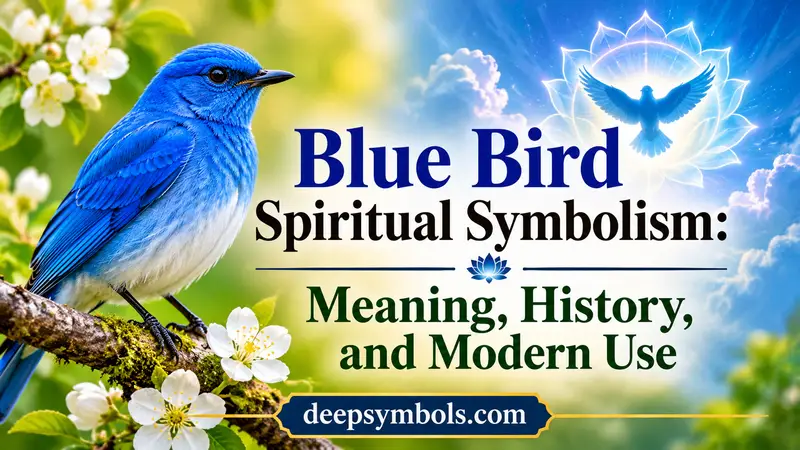
A blue bird often catches people’s attention because of its striking color, delicate appearance, and association with open skies and natural freedom. Blue bird spiritual symbolism commonly connects the bird with happiness, hope, emotional healing, and the possibility of a fresh beginning. Whether seen in a garden, featured in artwork, or chosen for a tattoo, a blue bird can represent the desire for a more peaceful and meaningful life.
In the United States, blue birds have a particularly recognizable cultural association with happiness and optimism. The eastern bluebird, mountain bluebird, and western bluebird are familiar North American species, and their appearance has helped make them popular subjects in birdwatching, garden design, photography, and conservation.
However, the meaning of a blue bird is not limited to happiness. Its color has associations with calmness and spirituality, while its ability to fly makes it a natural image of independence and freedom. Different cultures, religious traditions, and personal experiences have also shaped how people interpret blue birds.
Understanding this symbolism requires separating established cultural traditions from modern spiritual interpretations. A blue bird can be a meaningful personal reminder without every sighting necessarily representing a supernatural message.
Quick Answer
Blue bird spiritual symbolism commonly represents happiness, hope, freedom, emotional healing, and new beginnings in modern American culture. Historically, blue birds have also been associated with good fortune, peace, and the human desire for spiritual renewal, while their blue coloring connects them with the sky, openness, and tranquility.
TL;DR
- Blue birds commonly symbolize happiness, optimism, and emotional renewal.
- Their blue coloring connects them with calmness, openness, and the sky.
- North American bluebirds represent familiar themes of nature and conservation.
- Their ability to fly makes them symbols of independence and freedom.
- Blue bird tattoos often represent hope, personal growth, and resilience.
- Cultural interpretations vary, and not every sighting is a supernatural sign.
1. What Does a Blue Bird Represent Spiritually?
A blue bird can represent several positive ideas, depending on the cultural setting and the personal meaning attached to its appearance.
Happiness and joy are among its most familiar associations. The phrase “bluebird of happiness” has become part of American cultural language, connecting the bird with contentment and the possibility of better circumstances.
Hope and renewal are also common interpretations. A blue bird appearing after a difficult period may serve as a personal reminder that circumstances can change and that a fresh beginning remains possible.
Freedom and independence come from the bird’s natural ability to travel through open spaces. Its flight can represent the desire to move beyond limitations and make independent choices.
Peace and emotional balance are associated with its blue coloring. Blue is frequently used in American design to suggest calmness, stability, and trust.
Spiritual awareness is a more interpretive association. Some contemporary spiritual traditions connect blue birds with intuition, inner reflection, and a stronger connection with one’s beliefs.
These meanings are not universal religious teachings. They are cultural and personal interpretations influenced by the bird’s appearance, behavior, color, and place in human imagination.
2. Why Blue Birds Are Associated With Happiness
The association between blue birds and happiness has a specific literary history, particularly in European storytelling.
One important influence was The Blue Bird (1908), a play by Belgian writer Maurice Maeterlinck. The story follows two children searching for a magical blue bird believed to bring happiness. They travel through unfamiliar places in pursuit of it, only to discover that the bird they were searching for was already at home.
The story introduced an enduring idea: happiness is not always found by traveling somewhere else or acquiring something new. Sometimes it exists in ordinary relationships, familiar surroundings, and things people overlook.
The play became popular internationally and helped establish the expression “bluebird of happiness” in American cultural language. Its influence extended into music, theater, and film.
This literary background is important because people sometimes assume that the bluebird has represented happiness in every culture since ancient times. The modern American expression has a more identifiable literary history.
For contemporary readers, the bluebird can therefore represent appreciation for what is already present rather than an endless search for something better.
3. The Historical Origins of Blue Bird Symbolism
Blue birds have appeared in European folklore, fairy tales, and artistic traditions long before their modern popularity in American culture.
A notable earlier example is The Blue Bird, a fairy tale published by French writer Madame d’Aulnoy in the seventeenth century. The story features an enchanted prince transformed into a blue bird, connecting the bird with love, enchantment, and transformation.
Maeterlinck’s later play developed the blue bird into a broader image of happiness and the search for fulfillment.
In North America, actual bluebirds also became familiar subjects in nature writing and observation. Their vivid plumage, recognizable calls, and presence in open habitats contributed to their popularity.
It is useful to distinguish three historical influences:
- European fairy tales associated blue birds with enchantment, love, and extraordinary circumstances.
- Early twentieth-century literature popularized the bluebird as an emblem of happiness.
- North American birdwatching and conservation helped establish the actual bluebird as a beloved part of local wildlife.
These influences contributed to the bird’s modern positive associations, but they should not be combined into a single ancient belief system.
4. The Bluebird in Native American Traditions
Blue birds appear in some Native American stories and ceremonial traditions, although their meanings differ among individual nations.
One example comes from Navajo tradition, where the mountain bluebird is associated with the rising sun and morning. A traditional Bluebird Song welcomes the dawn and encourages people to rise with the new day.
This association connects the bird with awakening, renewal, and the return of daylight. Its meaning comes from a particular cultural and ceremonial setting rather than a universal Native American belief.
Stories about how the bluebird received its color have also been recorded in collections of Southwestern Indigenous folklore. These stories should be understood within their specific cultural histories, not treated as interchangeable traditions.
Respectful interpretation matters here. Native American peoples have distinct languages, spiritual practices, and oral histories. It would be inaccurate to claim that every Indigenous community considers a blue bird a symbol of happiness, luck, or spiritual guidance.
For modern readers, these traditions demonstrate how the same bird can acquire meanings connected with morning, seasonal change, and cultural identity.
5. Blue Bird Symbolism in Christianity and the Bible
Blue birds can inspire Christian reflection, particularly through their associations with hope, creation, and renewal. However, the Bible does not assign a specific symbolic meaning to the bluebird as a species.
Scripture frequently uses birds to communicate lessons about God’s care and the natural world. In Matthew 6:26, Jesus points to the birds of the air when teaching about trust in God’s provision. In Psalm 104, birds appear as part of the wider celebration of creation.
These passages can provide a foundation for personal reflection when someone encounters a blue bird.
For example, a Christian might interpret its appearance as a reminder to:
- Appreciate the beauty of God’s creation.
- Maintain hope during uncertain circumstances.
- Trust in divine provision rather than becoming consumed by worry.
- Recognize the value of ordinary living things.
The color blue also has associations with heaven and sacred imagery in some Christian artistic traditions. Biblical descriptions of blue materials, including the blue thread used in the Israelites’ garments in Numbers 15:38, have contributed to religious interpretations of the color.
Nevertheless, a blue bird should not automatically be treated as a direct message from God. Its spiritual meaning is best understood as personal reflection inspired by nature and established religious teachings, rather than a biblical promise about a particular animal.
6. The Spiritual Meaning of Blue as a Color
The bird’s color contributes significantly to its symbolic interpretation.
Blue is commonly associated with the sky, open spaces, water, and distant horizons. These natural associations have helped establish its connections with calmness, stability, reflection, and freedom.
In American visual culture, blue is frequently used in settings where designers want to communicate trust, reliability, or peace. It appears in institutional branding, clothing, interior decoration, and artistic representations of nature.
When combined with a bird, these associations can create several interpretations.
Peace and tranquility: A blue bird may suggest emotional calm and the desire for a quieter life.
Spiritual reflection: Its color can evoke the sky and encourage thoughts about faith, perspective, and personal beliefs.
Honest communication: Blue is sometimes associated with clarity and trust, making the bird an appealing image for sincerity.
Freedom and openness: The combination of blue skies and a flying bird suggests possibilities beyond familiar surroundings.
These interpretations are cultural associations rather than fixed spiritual laws. Different shades of blue may also communicate different moods. A bright blue bird can appear cheerful and energetic, while a darker blue image may feel more serious or reflective.
7. What Different Blue Birds Symbolize
Not every blue bird is the same species, and the particular bird someone encounters can influence its personal or cultural meaning.
<text weight=”semibold”>Eastern Bluebird</text>
<AsyncImage query=”Eastern bluebird male perched on branch vivid blue back rusty orange breast nature photography” aspectRatio=”16:9″ width=”100%”/>
The <Entity value=”Eastern Bluebird” category=”animal” disambig=”North American songbird species”/> is widely recognized in the eastern United States. Its bright blue feathers and warm reddish breast make it a familiar image of happiness, renewal, and the arrival of spring.
<text weight=”semibold”>Western Bluebird</text>
<AsyncImage query=”Western bluebird male perched natural branch blue plumage orange breast wildlife photography” aspectRatio=”16:9″ width=”100%”/>
The <Entity value=”Western Bluebird” category=”animal” disambig=”North American thrush species”/> is found across western North America. In personal symbolism, it can represent optimism, independence, and appreciation for the natural environment.
<text weight=”semibold”>Mountain Bluebird</text>
<AsyncImage query=”Male mountain bluebird brilliant sky blue feathers perched on mountain meadow branch” aspectRatio=”16:9″ width=”100%”/>
The <Entity value=”Mountain Bluebird” category=”animal” disambig=”North American mountain-dwelling thrush”/> is especially striking because the adult male has predominantly blue plumage. Its association with open western landscapes can make it an image of freedom, spaciousness, and new possibilities.
These three species belong to the North American bluebird group. Their appearance and habitats provide natural inspiration for symbolism, although the spiritual meanings assigned to each are largely interpretive rather than established species-specific traditions.
8. Blue Birds as Symbols of New Beginnings and Transformation
A blue bird can represent a fresh start because of its connection with spring, open skies, and the movement of birds through changing environments.
In many parts of the United States, bluebirds become more noticeable during the breeding season. Their activity around nesting sites can coincide with the arrival of warmer weather and renewed plant growth.
This seasonal association helps explain why people connect bluebirds with beginnings and positive change.
A person starting a new career, recovering from a difficult relationship, or entering a different stage of life might choose a bluebird as a personal reminder of progress.
The symbolism can also be connected with the bird’s ability to move between locations. Flight provides a natural image of leaving familiar circumstances and exploring new possibilities.
Transformation does not necessarily mean abandoning the past. Like the children in Maeterlinck’s story, someone may discover that happiness comes from recognizing the value of what already exists.
The bluebird therefore offers two complementary interpretations: the courage to move forward and the wisdom to appreciate the present.
9. Blue Bird Symbolism in American Culture
The bluebird has a recognizable place in American cultural history, especially through literature, music, and public symbolism.
The phrase “bluebird of happiness” became particularly familiar during the twentieth century. Songs and theatrical adaptations helped spread the idea that the bird represented optimism and the possibility of finding happiness.
Bluebird imagery also entered American political history. In 1915, the Massachusetts Woman Suffrage Association distributed bluebird signs during its campaign for women’s voting rights in a state referendum. The bird represented cheerfulness and hope during an important struggle for political participation.
Although the referendum failed, the campaign demonstrates how the bluebird could represent collective optimism rather than simply personal happiness.
Today, bluebirds are also appreciated as symbols of American wildlife. Eastern bluebirds are state birds of New York and Missouri, giving the species a place in regional identity.
Their popularity in backyard birdwatching and conservation has further strengthened their cultural presence. Nest boxes, wildlife gardens, and community conservation projects help people develop a direct relationship with these birds.
The American bluebird is therefore connected with several ideas: personal happiness, political hope, regional identity, and appreciation for nature.
10. Emotional and Psychological Meaning of Seeing a Blue Bird
People often attach personal meaning to encounters with animals, especially when those encounters happen during emotionally significant periods.
Seeing a blue bird after a stressful experience may feel encouraging because its familiar associations include hope and happiness. Someone dealing with uncertainty might interpret the encounter as a reminder to remain optimistic.
From a psychological perspective, this experience can be understood through personal association and attention. When someone connects a particular image with a meaningful idea, noticing that image can bring the associated feelings back into awareness.
A blue bird may remind one person of a childhood garden, another of a deceased family member, and someone else of a period when life began improving.
These responses are personal rather than universal.
The bird can also encourage emotional reflection. Its presence may prompt someone to consider whether they need more freedom, greater peace, or a change in their daily routine.
Rather than assuming that every encounter predicts something, it is more useful to consider what the experience brings to mind and whether that reflection supports a positive decision.
11. Blue Bird Symbolism in Dreams
Dream interpretations involving blue birds often focus on hope, emotional balance, freedom, and positive change.
A blue bird flying through an open sky may suggest independence or the desire to move beyond a restrictive situation. A bird resting peacefully on a branch may bring to mind contentment, stability, or the need to slow down.
Other possible interpretations include:
- A singing blue bird: Happiness, optimism, or a desire to express feelings.
- A blue bird entering a home: Personal contentment, family connections, or appreciation of domestic life.
- A flying blue bird: Independence, ambition, and changing circumstances.
- An injured blue bird: Emotional vulnerability, disappointment, or concern for something valuable.
- A group of blue birds: Friendship, companionship, and shared happiness.
Dreams do not have universally established symbolic meanings. Their interpretation depends on personal experiences, emotions, and the events surrounding the dream.
For example, someone who enjoys birdwatching may dream about bluebirds simply because they have recently spent time observing them.
A thoughtful interpretation considers both the bird’s familiar cultural associations and the dreamer’s actual emotional circumstances.
12. Blue Bird Symbolism in Tattoos, Jewelry, and Art
Blue birds are popular subjects in decorative art because their bright coloring makes them visually distinctive while their cultural associations remain largely positive.
<AsyncImageGroup query={[“bluebird traditional American tattoo design perched on flowering branch”,”delicate bluebird tattoo watercolor style shoulder”,”bluebird pendant silver gemstone jewelry”,”bluebird watercolor botanical wall art”]} aspectRatio=”5:4″ layout=”bento”/>
Tattoos: A bluebird tattoo may represent happiness, recovery, freedom, or a fresh beginning. Some people choose the design to commemorate an important life change or honor a loved one.
Jewelry: Bluebird pendants, earrings, and brooches can serve as personal reminders of optimism, affection, or family memories.
Home decor: Bluebird paintings, ornaments, and decorative plates often bring associations of spring, peaceful surroundings, and appreciation for nature.
Fashion: Bluebird patterns on scarves, clothing, and accessories can communicate a cheerful connection with wildlife and natural beauty.
Memorial art: Some people incorporate bluebirds into memorial designs as a personal expression of hope, remembrance, or emotional continuity.
These uses demonstrate how the bird’s meaning can become connected with individual experiences. A bluebird tattoo chosen after a difficult period may represent resilience, while the same image worn as jewelry might simply celebrate someone’s love of nature.
13. Blue Birds as Symbols of Freedom and Independence
Birds naturally suggest freedom because they can move through the air and travel across landscapes without being restricted to roads or walking paths.
Blue birds strengthen this association through their connection with open skies and expansive natural environments.
In symbolic artwork, a blue bird flying away from a branch may represent independence or the decision to leave behind an uncomfortable situation. A bird with its wings spread can suggest confidence and the willingness to explore unfamiliar opportunities.
This interpretation can be particularly meaningful during major life transitions.
A young adult leaving home, someone beginning a different career, or a person rebuilding life after a relationship may connect with the image of a bird moving into open space.
Freedom does not always mean escaping responsibilities. It can also involve developing personal confidence, establishing boundaries, or making decisions that reflect individual values.
The bluebird becomes a visual reminder that personal growth sometimes requires movement beyond familiar surroundings.
14. Common Misunderstandings About Blue Bird Spiritual Symbolism
Blue birds are often assigned meanings that go beyond what historical and cultural evidence supports. Understanding these differences helps keep their symbolism grounded.
Misunderstanding 1: Every blue bird sighting is a divine message.
There is no universal religious rule that every encounter carries a supernatural instruction. A sighting may be personally meaningful without being a prediction or command.
Misunderstanding 2: All Native American cultures share one bluebird belief.
Indigenous traditions differ significantly. Particular stories and ceremonies should be connected with the specific nations from which they originate.
Misunderstanding 3: Bluebirds have always represented happiness everywhere.
The familiar American expression has a particularly important connection with European literature from the early twentieth century. Older traditions have their own distinct histories.
Misunderstanding 4: Every blue bird is a bluebird species.
A blue jay, indigo bunting, and eastern bluebird are different birds. Their appearance may inspire similar personal interpretations, but their natural histories are not interchangeable.
Misunderstanding 5: A blue bird always predicts good fortune.
Positive symbolism does not establish that a bird predicts future events. Its meaning is better understood as a cultural association or personal reminder.
15. How Blue Bird Symbolism Has Evolved Over Time
The blue bird’s modern meaning developed through several overlapping influences.
European fairy tales introduced associations with enchantment and extraordinary experiences. Maeterlinck’s 1908 play helped establish the bluebird as an image of happiness, particularly through its story about finding fulfillment close to home.
During the twentieth century, American music, theater, film, and political campaigns expanded the bird’s cultural significance. The bluebird became associated with optimism, hope, and the possibility of a better future.
At the same time, North American conservation and birdwatching encouraged a different kind of appreciation. People began to recognize the bird not only as a literary image but also as a real species deserving protection.
Today, bluebirds appear in personal art, tattoos, jewelry, garden design, photography, and social media. Their symbolism has expanded to include emotional healing, independence, self-discovery, and personal renewal.
Despite these changes, happiness remains the association most closely connected with the familiar American phrase.
Comparing Common Blue Bird Meanings
| Context | Common symbolic meaning | Main association |
|---|---|---|
| American culture | Happiness and optimism | Bluebird of happiness |
| Spiritual reflection | Hope and renewal | Personal faith and reflection |
| Native American traditions | Dawn and cultural teachings in particular traditions | Navajo Bluebird Song |
| Dreams | Freedom and emotional balance | Personal experiences |
| Tattoos and jewelry | New beginnings and resilience | Individual identity |
| Nature and conservation | Appreciation and protection | North American wildlife |
FAQs
1. What does seeing a blue bird mean spiritually?
Seeing a blue bird can serve as a personal reminder of hope, happiness, freedom, and emotional renewal. Some people interpret the encounter through their religious beliefs, while others simply appreciate its connection with nature.
2. Is a blue bird a sign of good luck?
Blue birds are commonly associated with good fortune and positive circumstances in modern symbolic interpretations. However, there is no established rule that seeing one guarantees a favorable event.
3. What does a blue bird symbolize in Christianity?
The bluebird itself has no specifically assigned biblical meaning. Christians may associate it with God’s creation, hope, and trust by reflecting on broader biblical teachings about birds and the natural world.
4. What does a blue bird tattoo symbolize?
A bluebird tattoo commonly represents happiness, freedom, resilience, and fresh beginnings. It can also commemorate an important relationship or a personal experience of overcoming hardship.
5. What does a blue bird symbolize in dreams?
A blue bird in a dream may represent optimism, independence, emotional peace, or a desire for change. The interpretation depends on the bird’s behavior and the dreamer’s personal circumstances.
6. What does a blue bird symbolize in Native American culture?
Meanings vary among Indigenous nations and traditions. In Navajo tradition, the mountain bluebird is associated with the rising sun and morning, reflecting themes of awakening and renewal.
7. Does a blue bird symbolize a deceased loved one?
Some people personally associate a blue bird with remembrance, comfort, or the memory of someone who has died. This can be a meaningful form of personal symbolism, although it is not a universal religious teaching.
Conclusion
Blue bird spiritual symbolism brings together happiness, hope, freedom, emotional renewal, and the possibility of positive change. The bird’s familiar American association with happiness developed through storytelling, poetry, music, and popular culture. The Missouri Department of Conservation’s guide to bluebirds explains that the eastern bluebird was designated Missouri’s state bird in 1927 because it represented happiness, reflecting the bird’s longstanding place in American imagination.
In modern American culture, bluebirds can express different personal meanings depending on the setting. For some people, they represent faith and spiritual renewal; for others, they recall a loved one, celebrate independence, or offer a reminder to appreciate everyday happiness. These interpretations are personal and cultural associations rather than universal spiritual rules.
Ultimately, blue bird spiritual symbolism reminds us that hope and happiness can emerge in unexpected places. Whether encountered in a garden, featured in artwork, or chosen for a meaningful tattoo, the bluebird can encourage optimism, gratitude, and a renewed appreciation for life. Its lasting appeal comes from the connection between its natural beauty and the human desire to believe that brighter moments are always possible.


