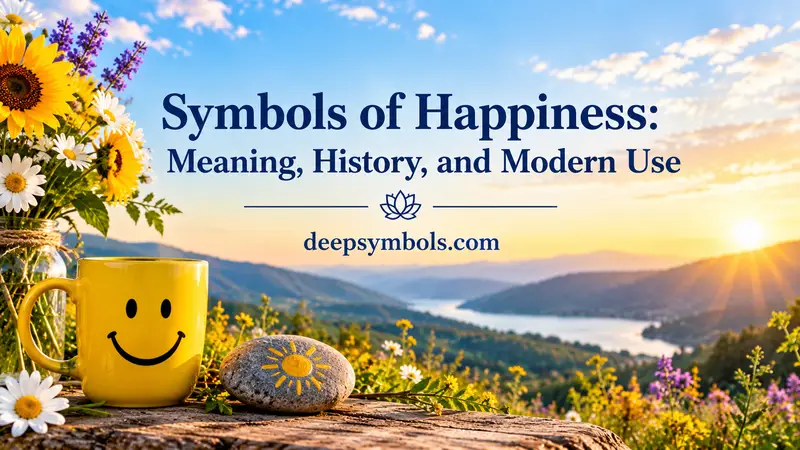
Symbols of happiness appear in everyday life, from smiling faces and bright sunflowers to rainbows, butterflies, and images of birds in flight. These familiar images communicate joy, hope, freedom, and emotional well-being without requiring a lengthy explanation. The symbols of happiness people recognize today reflect a combination of natural experiences, cultural traditions, religious beliefs, and personal memories.
In the United States, happiness symbols appear on greeting cards, clothing, home decorations, jewelry, social media profiles, and gifts celebrating birthdays, graduations, weddings, and new beginnings. A yellow smiley face may express uncomplicated cheerfulness, while a butterfly can suggest personal growth after a difficult period. The meaning often depends on the occasion and the person using the image.
Not every symbol represents happiness in exactly the same way. Some express immediate pleasure, others suggest lasting contentment, and some communicate hope during difficult circumstances. Understanding these distinctions reveals why certain images have become recognizable signs of joy and how their meanings continue to evolve.
Quick Answer
Symbols of happiness commonly represent joy, optimism, love, freedom, gratitude, and emotional well-being in modern American culture. Images such as sunshine, rainbows, butterflies, flowers, and smiling faces draw on natural experiences, historical traditions, and cultural associations to communicate pleasure, renewal, and hope.
TL;DR
- Sunshine represents warmth, optimism, and brighter days ahead.
- Smiley faces communicate friendliness, cheerfulness, and positive emotion.
- Butterflies symbolize transformation, renewal, and the freedom to grow.
- Sunflowers and other bright flowers express joy, affection, and appreciation.
- Rainbows often represent hope, possibility, and beauty after a storm.
- Birds in flight can suggest freedom, peace, and emotional release.
1. What Makes an Image a Symbol of Happiness?
A symbol of happiness is an image, object, color, animal, or gesture that communicates joy or a related positive feeling. Some symbols have widely recognized cultural meanings, while others become meaningful through personal experience.
A smile is one of the clearest examples. People often associate an upturned mouth and relaxed facial expression with pleasure or friendliness. The familiar yellow smiley face simplifies this expression into a design that can be understood across many everyday settings.
Natural images work differently. Sunshine can suggest a pleasant day, warmth, or the end of a difficult period. Flowers may remind someone of a celebration, a loved one, or a memorable garden. Their meanings emerge partly from the experiences people associate with them.
Happiness itself also has several dimensions. Excitement, peaceful contentment, affection, relief, and hope are related but distinct experiences. A party balloon may suggest celebration, a peaceful lake may evoke calm, and a family photograph may represent belonging.
This distinction matters when interpreting symbols. An image does not have to represent constant excitement to communicate happiness. Sometimes the most meaningful sign of joy is a quiet scene that suggests safety, connection, or a sense of being at home.
2. Sunshine: A Symbol of Optimism and New Beginnings
<AsyncImage query=”golden sunshine breaking through clouds over green meadow warm hopeful landscape photography” aspectRatio=”16:9″ width=”100%”/>
Sunshine is one of the most familiar symbols of happiness because sunlight affects both the appearance of the world and people’s everyday experiences. Bright days often accompany outdoor activities, gatherings, gardening, and time spent with friends or family.
In American culture, a sun with a smiling face appears on children’s artwork, greeting cards, classroom decorations, and cheerful illustrations. The image combines the physical qualities of sunlight with a recognizable expression of pleasure.
The sun also has a long history of religious and cultural significance. Ancient Egyptian traditions associated the sun with divine power and the maintenance of life. In ancient Greek religion, Helios personified the sun, while many other societies developed their own solar deities and ceremonies. These traditions did not all treat the sun as a symbol of happiness, but they helped establish its importance as a source of light, warmth, and vitality.
In modern symbolic language, sunshine frequently represents optimism and the possibility of improvement. Expressions such as a sunny outlook describe a hopeful attitude, while the phrase “a ray of sunshine” commonly refers to someone who brings happiness to others.
Sunshine can also symbolize relief after hardship. A bright sky appearing after days of rain offers a natural comparison for the experience of emerging from sadness or uncertainty.
Its meaning is not exclusively positive. Excessive heat and drought can make sunlight threatening, demonstrating that the sun’s symbolism depends on circumstances. Nevertheless, its association with warmth, visibility, and renewed possibility makes it a recognizable image of happiness.
3. Smiley Faces: The Modern Language of Cheerfulness
<AsyncImage query=”classic yellow smiley face graphic simple cheerful expression clean bright background” aspectRatio=”16:9″ width=”100%”/>
The smiley face is among the most recognizable modern symbols of happiness. Its simple combination of a circular face, two eyes, and an upturned mouth translates a human expression into a design that can be reproduced on almost anything.
The familiar yellow smiley face became widely recognizable in the United States during the 1960s. Graphic designer Harvey Ball created a well-known version in 1963 for an employee morale campaign. Other versions and commercial uses subsequently helped spread the image through popular culture.
Unlike older religious or natural symbols, the modern smiley face has a comparatively recent and identifiable design history. Its meaning depends largely on the facial expression it represents: friendliness, amusement, satisfaction, or encouragement.
Today, smiley faces appear on stationery, clothing, stickers, toys, packaging, and digital interfaces. In text messages, a smiling emoji can soften a statement, communicate warmth, or make a brief response feel more friendly.
However, the symbol does not always indicate genuine happiness. A forced smile can conceal discomfort, and a smiley face used in a tense conversation may communicate sarcasm or passive aggression. Some people also use cheerful imagery to express a deliberately exaggerated or ironic mood.
The smiley face illustrates how symbols can become culturally familiar through repetition. Its meaning does not depend on ancient mythology or a religious tradition; it comes from a recognizable expression that people have learned to associate with positive social interaction.
4. Butterflies: Happiness Through Change and Personal Growth
<AsyncImage query=”colorful monarch butterfly resting on blooming wildflowers sunny garden close up photography” aspectRatio=”16:9″ width=”100%”/>
Butterflies often symbolize transformation, renewal, freedom, and the happiness that can accompany personal growth. Their life cycle provides a visible reason for these associations: a caterpillar develops into a chrysalis before emerging as an adult butterfly.
This biological transformation has inspired interpretations of change in many cultural settings. In modern American life, butterflies frequently appear in graduation gifts, memorial designs, inspirational artwork, and tattoos commemorating a major personal transition.
A butterfly may represent happiness after a period of difficulty rather than happiness alone. Someone recovering from a painful experience might choose a butterfly tattoo to mark a new chapter. Another person may use a butterfly image to celebrate independence, personal development, or the freedom to make different choices.
Butterflies also contribute to the symbolism of spring and summer. Their appearance among flowers and green foliage can suggest a garden returning to life after winter, making them natural companions for images of renewal.
Cross-cultural meanings vary. In some Chinese artistic traditions, butterflies are associated with love, joy, and long life, depending on the imagery and context. In other traditions, butterflies may be connected with the soul or the transition between different states of existence.
These interpretations should not be treated as one universal belief. The butterfly’s meaning changes across cultures and individuals.
For many Americans today, its most recognizable message is that change can create room for new experiences. Happiness, in this sense, is not merely a pleasant feeling but the possibility of becoming someone different from who you were before.
5. Sunflowers: Joy, Warmth, and Appreciation
<AsyncImage query=”bright yellow sunflowers in full bloom facing sunlight summer garden natural photography” aspectRatio=”16:9″ width=”100%”/>
Sunflowers are strongly associated with cheerfulness because of their large yellow flower heads, visible centers, and frequent appearance in sunny summer gardens. Their size and color make them immediately noticeable in floral arrangements, paintings, and decorative designs.
In the United States, sunflowers are popular in summer bouquets, farmers’ market displays, kitchen decor, and seasonal celebrations. They often communicate friendliness, appreciation, encouragement, or an uncomplicated wish to brighten someone’s day.
Their visual qualities contribute to their meaning. Yellow is commonly associated with brightness and energy, while a flower arrangement can communicate affection without the romantic implications that red roses sometimes carry.
Sunflowers also have a history beyond decorative use. They were cultivated by Indigenous peoples in North America long before European colonization and served practical purposes, including food production. Their cultural history should not be reduced to their modern decorative symbolism.
Today, a sunflower may be chosen for a birthday bouquet, a thank-you gift, or an arrangement intended to comfort a friend. It can communicate warmth without requiring an elaborate message.
Sunflowers are not universally interpreted as symbols of happiness, and their meanings depend on the setting. Still, their visual brightness and place in American gardening make them especially recognizable representations of joy, gratitude, and a welcoming attitude.
6. Rainbows: Hope, Possibility, and Joy After Difficulty
<AsyncImage query=”natural rainbow arching over green countryside after rain soft sunlight landscape photography” aspectRatio=”16:9″ width=”100%”/>
A rainbow often symbolizes happiness because it appears when sunlight interacts with water droplets, frequently while rain clouds are clearing. The sudden appearance of vivid colors against a gray sky can make an ordinary weather event feel like a special moment.
In the United States, rainbows appear on children’s products, birthday decorations, greeting cards, classroom artwork, and inspirational designs. They commonly communicate optimism, imagination, diversity, or the promise of better circumstances.
Religious traditions have also shaped rainbow symbolism. In the biblical story of Noah, the rainbow serves as a sign of God’s covenant following the flood. In that context, it represents a promise and a new relationship rather than happiness alone.
Rainbow imagery has acquired additional meanings in modern public life. LGBTQ+ communities use the rainbow flag as a symbol of pride, visibility, and inclusion. The six-color Pride flag developed from a design created by artist Gilbert Baker in 1978. Its meaning is distinct from the rainbow’s general association with joy, although both can communicate hope and positive possibility.
A rainbow may also symbolize happiness following adversity. Because it can appear after a storm, it offers a familiar visual comparison for relief, recovery, and the return of brighter circumstances.
Its meaning depends on the context. A rainbow on a child’s drawing may represent wonder, while one on a Pride flag communicates identity and community. In both cases, color helps express possibilities that extend beyond ordinary expectations.
7. Birds in Flight: Freedom and Emotional Lightness
<AsyncImage query=”flock of birds flying freely across golden sunrise open sky peaceful landscape” aspectRatio=”16:9″ width=”100%”/>
Birds in flight often symbolize freedom, hope, and the feeling of being released from restrictions. Their ability to move through the sky gives people a natural image for independence and the desire to explore beyond familiar boundaries.
In American culture, flying birds appear in paintings, tattoos, jewelry, memorial artwork, and designs celebrating major life changes. A person who has completed a difficult period may choose a bird in flight to represent regained independence or the ability to move forward.
The symbolism differs according to the species and the setting. Doves commonly represent peace, while eagles may communicate strength, freedom, or national identity in the United States. Small songbirds may suggest everyday joy through their movement and calls.
Birds have also played important roles in religious and mythological traditions. In Christianity, the dove is associated with the Holy Spirit in accounts of Jesus’s baptism. Other cultures connect particular birds with good fortune, ancestors, or spiritual messages.
A bird in flight can express happiness without depicting a smile or celebratory scene. Its meaning rests on movement, open space, and the apparent absence of barriers.
The image can also represent relief from emotional pressure. When people describe feeling lighter after making a difficult decision, the metaphor resembles the freedom of a bird taking to the air.
This symbol is especially suitable for themes of independence, recovery, and the happiness that comes from having room to choose one’s own direction.
8. Flowers and Blossoms: The Happiness of Connection
Flowers communicate happiness in ways that depend on their species, colors, and social context. They are given for birthdays, graduations, anniversaries, celebrations, and expressions of gratitude, making them an established part of American social life.
Different flowers carry different associations. Daisies are often connected with innocence and simplicity, yellow roses with friendship or warmth, and tulips with affection and the arrival of spring. Sunflowers, as discussed earlier, frequently express cheerfulness and appreciation.
Flowers can also represent happiness through their timing. Blossoms appearing after winter suggest renewal, while a garden in full bloom may evoke abundance and the pleasure of seeing careful work come to fruition.
Their meanings are not always joyful. White lilies may appear at funerals, and certain flowers can express mourning or remembrance. This variety demonstrates that flowers do not possess fixed emotional meanings independent of context.
In the United States, flowers are especially useful because they can communicate feelings that might be difficult to put into words. A bouquet may thank a friend, welcome a new baby, congratulate a graduate, or show affection without implying a romantic relationship.
Floral happiness symbolism also appears in interior design. Flower-patterned textiles, botanical artwork, and fresh arrangements can make a space feel welcoming or connected to nature.
Ultimately, flowers often symbolize happiness through relationships. They are not merely attractive objects; they are frequently exchanged as gestures of care, recognition, and shared celebration.
9. Yellow: A Color Associated With Cheerfulness
Yellow is often associated with happiness, optimism, warmth, and mental alertness in modern American design. Its brightness makes it conspicuous, which helps explain its use in signs, children’s illustrations, celebratory decorations, and products intended to feel energetic.
The connection between yellow and happiness is reinforced by familiar imagery. Sunlight, ripe sunflowers, spring flowers, and the classic yellow smiley face all contribute to the color’s positive associations.
In home decor, yellow accents may create a lively atmosphere in kitchens, entryways, or shared spaces. In clothing and graphic design, the color can communicate playfulness or confidence.
However, color meanings are not universal. Yellow has also been associated with caution, sickness, jealousy, or betrayal in various historical and cultural settings. Its effect depends on shade, surrounding colors, social conventions, and the object being represented.
A soft yellow may feel gentle and welcoming, while a highly saturated yellow can be visually intense. A yellow warning sign, meanwhile, is designed to attract attention rather than communicate happiness.
Color symbolism also interacts with personal experience. Someone may associate yellow with a beloved family member’s garden, while another person may connect it with a particular sports team or cultural tradition.
Yellow is therefore best understood as a common sign of cheerfulness rather than a guaranteed emotional signal. Its associations with brightness and warmth make it effective when a design aims to feel lively, friendly, or optimistic.
10. The Number Seven and Other Symbols of Good Fortune
Happiness is sometimes represented indirectly through symbols associated with luck, favorable outcomes, or good fortune. These symbols do not necessarily represent an emotional state; instead, they express the hope that life will bring positive experiences.
The number seven is a familiar example in American culture. It appears in expressions about lucky sevens, casino imagery, games, and popular entertainment. Its reputation draws on several traditions, including biblical associations and later European folklore, although its meanings vary by context.
Four-leaf clovers provide another example. Because the four-leaf form is less common than the usual three-leaf clover, it became associated with good luck in Irish-related folklore and later popular culture. In the United States, the image is especially visible around St. Patrick’s Day.
Horseshoes also appear as good-luck symbols in American homes and decorative objects. Traditions differ about how they should be positioned, and their associations with luck developed through folklore rather than a universally accepted religious rule.
These symbols relate to happiness because people often connect good fortune with the possibility of a favorable future. A lucky charm may represent confidence, anticipation, or the desire for a successful outcome.
However, luck and happiness are not identical. A person can feel happy without experiencing good fortune, and a lucky symbol does not guarantee that circumstances will improve. Its value is often emotional or cultural rather than predictive.
11. Happiness Symbols in American Holidays and Celebrations
American holidays provide some of the clearest examples of happiness symbolism because familiar images become connected with repeated social experiences.
Valentine’s Day uses hearts, roses, and affectionate messages to celebrate love and personal connection. Birthdays feature balloons, candles, colorful decorations, and smiling faces to mark another year of life.
Graduations often use images of sunshine, open roads, birds, or butterflies to communicate possibility and the transition into a new stage of life. Wedding celebrations feature flowers, doves, and other images that may suggest affection, partnership, and hope for the future.
The Fourth of July uses fireworks and national colors to express celebration and collective identity. These symbols do not represent happiness in the same direct way as a smiley face, but they contribute to the joyful atmosphere of a shared event.
Spring festivals and Easter decorations may feature flowers, eggs, and young animals. Depending on the context, these images communicate new life, seasonal renewal, religious hope, or the pleasures of family gatherings.
The meaning of a symbol can become stronger through repetition. When a family uses the same decoration every year or friends exchange similar gifts for birthdays, the object may become associated with personal memories as well as the holiday itself.
Celebrations show that happiness is often social. Symbols help people recognize an occasion, express their feelings, and participate in a shared understanding of what the event means.
12. Personal Objects, Jewelry, and Tattoos That Represent Happiness
Many people choose objects that symbolize happiness because they want a visible reminder of an experience, relationship, or personal value.
A necklace featuring a sun may represent optimism, while a butterfly pendant might commemorate a major life transition. A sunflower tattoo can express appreciation for nature, affection for a family member, or a personal commitment to maintaining a positive outlook.
Other people prefer symbols with a specific personal history. A seashell collected during a memorable vacation, a small flower associated with a grandparent, or a charm received from a close friend may evoke more happiness than a universally recognized symbol.
This distinction between cultural and personal meaning is important. A heart generally communicates affection, but a particular heart-shaped pendant may represent one specific relationship. The object gains additional significance through the circumstances in which it was received or chosen.
In fashion, cheerful symbols appear on embroidered clothing, colorful accessories, patterned bags, and playful jewelry. Some designs use familiar images such as rainbows and smiley faces, while others rely on subtle details that only the wearer understands.
Personal happiness symbols can also mark recovery or resilience. A tattoo chosen after a difficult experience may remind someone of what they have overcome, even if other people interpret it differently.
The most meaningful choice is not necessarily the most popular image. It is the one whose associations reflect the person’s own experiences and intentions.
13. The Psychology of Happiness Symbols
Symbols can influence how people communicate and interpret emotions, but they should not be treated as direct measures of psychological well-being.
A familiar cheerful image may help communicate warmth, make a greeting feel more personal, or remind someone of a positive memory. A photograph of a loved one, for example, can evoke affection because of the experiences associated with that person.
Associations are learned through repetition and experience. If a particular flower regularly appears at family celebrations, it may eventually remind someone of belonging and joy. Similarly, a song or color can become associated with a meaningful period in life.
Symbols also make emotions easier to share. A smiling face or heart emoji can communicate a positive reaction when someone has little time to write a longer message. These images provide social shorthand, although they cannot fully explain complex feelings.
There is an important limitation: displaying happiness is not the same as experiencing it. People may use cheerful images while feeling sad, anxious, or exhausted, and a person who rarely uses positive symbols may still be content.
It is also unhelpful to assume that people must remain optimistic at all times. Images of sunshine and smiles can be encouraging, but they should not be used to dismiss grief or pressure someone to conceal genuine distress.
The healthiest interpretation recognizes that symbols can support connection and reflection without replacing honest communication or the practical conditions that contribute to well-being.
14. When Happiness Symbols Are Misunderstood or Overused
Happiness symbols are generally familiar, but their meanings can be distorted when people assume that one image has the same significance in every situation.
A rainbow, for example, may represent hope, childhood imagination, religious promise, or LGBTQ+ pride. Interpreting it without considering its context can overlook the specific identity or message being communicated.
Yellow is another example. It may suggest cheerfulness in a floral design but caution in a road sign. Similarly, a smiling face can express friendliness, irony, discomfort, or sarcasm depending on the conversation.
Commercial marketing can also oversimplify happiness. Products are sometimes decorated with cheerful imagery to suggest that buying something will automatically improve a person’s life. Such associations may be persuasive, but happiness depends on more than the objects people purchase.
Another misunderstanding is the assumption that positive symbolism must exclude sadness. Butterflies may represent growth after hardship, rainbows may follow storms, and memorial flowers can express both grief and love. These meanings show that happiness and sorrow can exist together.
Cultural sensitivity matters as well. Symbols associated with a particular religion, Indigenous tradition, or marginalized community should not be reduced to generic decorations without understanding their significance.
A thoughtful interpretation asks who is using the symbol, where it appears, and what experience it is intended to communicate. This approach preserves the usefulness of familiar imagery without assuming that every cheerful image tells the same story.
15. Comparing Common Symbols of Happiness
The following table summarizes several recognizable symbols and the meanings they commonly communicate in the United States.
| Symbol | Common meaning | Typical modern use |
|---|---|---|
| Sunshine | Optimism, warmth, new beginnings | Greeting cards, decor, inspirational artwork |
| Smiley face | Cheerfulness, friendliness, amusement | Text messages, stickers, clothing |
| Butterfly | Transformation, renewal, freedom | Tattoos, jewelry, graduation gifts |
| Sunflower | Joy, appreciation, warmth | Bouquets, summer decor, thank-you gifts |
| Rainbow | Hope, possibility, diversity | Celebrations, children’s art, Pride imagery |
| Four-leaf clover | Luck and favorable outcomes | St. Patrick’s Day decorations, charms, jewelry |
These symbols overlap, but each emphasizes a different aspect of happiness. Sunshine suggests optimism, butterflies emphasize change, and sunflowers communicate warmth and appreciation. Rainbows can express hope or inclusion, while four-leaf clovers focus more directly on luck than on happiness itself.
FAQs
1. What is the most common symbol of happiness?
The smiley face is one of the most immediately recognizable symbols of happiness in modern American culture. Sunshine and sunflowers are also widely used to express cheerfulness, optimism, and warmth.
2. What flower symbolizes happiness?
Sunflowers commonly represent joy, warmth, and appreciation, while daisies are often associated with innocence and cheerful simplicity. The meaning depends on the flower’s cultural associations, color, and the occasion for which it is given.
3. What animal symbolizes happiness?
Butterflies often symbolize happiness associated with transformation and new beginnings, while birds may represent freedom and emotional lightness. These associations vary across cultures, and particular species can carry additional meanings.
4. What color represents happiness?
Yellow is commonly associated with happiness, optimism, and energy in American design. However, colors can communicate different ideas depending on cultural traditions, visual context, and personal experience.
5. What symbol represents happiness after a difficult time?
A rainbow is a common symbol of hope after hardship because it may appear as storm clouds clear. A butterfly can also represent the happiness that follows personal change, recovery, or the beginning of a new chapter.
6. What does a happiness symbol tattoo mean?
A happiness symbol tattoo may represent optimism, gratitude, personal growth, freedom, or a meaningful relationship. Its specific meaning depends on the design and the personal experience that inspired the wearer to choose it.
7. Are symbols of happiness the same across cultures?
No. Some images, such as smiling faces or bright flowers, have recognizable positive associations in many settings, but their meanings are not universal. Religious beliefs, folklore, social conventions, and individual experiences can change how a symbol is understood.
Conclusion
Symbols of happiness give visible form to joy, hope, affection, and the experiences that make life meaningful. Sunshine can suggest optimism, butterflies can represent transformation, sunflowers can express warmth, and rainbows can evoke hope and possibility. The National Gallery, London’s exploration of Van Gogh’s Sunflowers illustrates how color and familiar natural images can communicate happiness, devotion, and other emotions through art.
In modern American culture, these symbols appear in gifts, celebrations, fashion, home decor, and digital communication. Their meanings are shaped by cultural traditions and personal memories, so an image that represents joy for one person may hold a different significance for another.
Ultimately, symbols of happiness are meaningful because they help people express and remember what brings them joy. Their purpose is not to promise a life without hardship, but to celebrate genuine moments of connection, gratitude, and hope. Whether represented by a sunflower, a rainbow, or a treasured personal object, a symbol becomes most valuable when it reflects an experience or relationship that makes life feel worthwhile.