
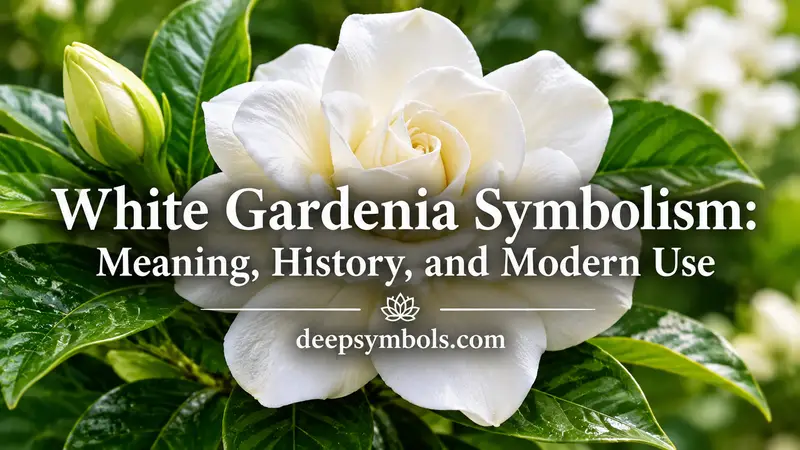
The white gardenia is admired for its creamy petals, glossy green leaves, and distinctive fragrance. Often associated with purity, sincere affection, elegance, and remembrance, this flower carries meanings that extend beyond its beauty. White gardenia symbolism is especially connected with love expressed through respect, quiet devotion, and emotions that are sometimes difficult to communicate openly.
In the United States, white gardenias appear in wedding arrangements, sympathy flowers, formal decorations, and personal gifts. Their soft color makes them suitable for occasions involving both celebration and reflection. Unlike brightly colored flowers that often communicate excitement or passion, white gardenias tend to suggest a more restrained and thoughtful kind of affection.
The flower also has an interesting cultural history. Gardenias originated in Asia and became popular ornamental plants in Europe and North America. Their association with refinement, romance, and meaningful personal relationships developed through gardening traditions, floral design, literature, and popular culture.
Understanding the white gardenia means looking at its botanical characteristics as well as the cultural associations attached to its color, fragrance, and appearance.
Quick Answer
White gardenia symbolism most commonly represents purity, sincere love, elegance, remembrance, and quiet devotion in modern American culture. Historically, gardenias have also been associated with refinement, romantic affection, and spiritual significance, with white petals strengthening their associations with innocence, peace, and respectful remembrance.
TL;DR
- White gardenias symbolize purity, sincerity, and genuine affection.
- Their fragrance and appearance contribute to associations with elegance and refinement.
- White gardenias are popular in American weddings and formal floral arrangements.
- Their use in sympathy flowers can express remembrance and respect.
- Gardenias have important cultural associations in China and Japan.
- Modern jewelry and tattoos use gardenias to represent personal devotion and beauty.
1. What Does a White Gardenia Look Like?
The gardenia is an evergreen flowering shrub known for its glossy leaves and fragrant blossoms. Its flowers typically have thick, waxy petals arranged in a rounded or layered formation, creating an appearance that feels both delicate and structured.
White gardenias are particularly recognizable because their petals often appear creamy white rather than completely bright white. Some varieties produce single flowers with fewer petals, while others develop fuller, rose-like blossoms.
The plant belongs to the genus Gardenia within the coffee family, Rubiaceae. Many cultivated varieties are grown for ornamental purposes, especially in warm climates and gardens where their fragrance can be appreciated.
Gardenias are commonly encountered in:
- Wedding bouquets and ceremony decorations.
- Home gardens and ornamental landscapes.
- Sympathy and memorial flower arrangements.
- Floral perfumes and scented products.
- Jewelry, artwork, and decorative patterns.
Their visual qualities help explain their symbolic associations. The white petals suggest cleanliness and simplicity, while the glossy foliage creates a contrast between softness and strength. Their fragrance adds another dimension, making the flower memorable even when it is not immediately visible.
2. Purity and Innocence
Purity is one of the most familiar meanings associated with white gardenias.
White flowers have long been used in many Western settings to represent cleanliness, innocence, sincerity, and freedom from wrongdoing. Gardenias share these associations because of their pale petals and refined appearance.
In American culture, white gardenias may be included in weddings, religious ceremonies, and formal celebrations where purity or a sincere beginning is an appropriate theme.
The meaning does not necessarily imply that a person is inexperienced or perfect. It can instead communicate honest intentions, emotional clarity, and a desire to approach a relationship with respect.
For example, someone might choose white gardenias for a wedding bouquet because they want flowers that represent an honest commitment rather than simply romantic excitement.
Their restrained appearance also makes them suitable for occasions where simplicity is more appropriate than elaborate decoration.
3. Sincere Love and Devotion
White gardenias are frequently associated with sincere affection and devoted relationships.
Unlike red roses, which are widely recognized as symbols of romantic passion, white gardenias communicate a quieter form of love. Their associations lean toward loyalty, respect, admiration, and emotional commitment.
This makes them appropriate for relationships in which affection is expressed through consistency and trust rather than dramatic gestures.
In the United States, gardenias may be given to romantic partners, spouses, family members, or people whose presence has made a lasting difference.
Their fragrance also contributes to their emotional appeal. A gardenia can become associated with a particular person or occasion because its scent remains memorable long after the flowers have been received.
White gardenias can therefore represent love that is thoughtful, respectful, and lasting. They are especially appropriate when someone wants to communicate genuine appreciation without relying on an overly dramatic floral arrangement.
4. Elegance, Refinement, and Sophistication
The gardenia has a long-standing association with elegance and refined taste.
Its structured petals, glossy foliage, and distinctive fragrance make it a popular choice for formal floral arrangements. White varieties are especially suited to sophisticated designs because their color works well with neutral decorations, delicate fabrics, and traditional ceremonial settings.
In American fashion and decorative culture, gardenias have appeared in formal hairstyles, corsages, wedding arrangements, and special-event decorations.
Their connection with elegance is not based on color alone. The flower’s visual balance and fragrance give it a distinctive presence without requiring bright colors or complicated arrangements.
White gardenias may therefore communicate:
- Grace and good taste.
- Respect for a special occasion.
- Understated beauty.
- Confidence and refinement.
- Appreciation for traditional style.
They are often chosen by people who prefer floral designs that feel classic rather than trendy.
5. Historical Origins of Gardenia Symbolism
Gardenias are native to tropical and subtropical regions of Asia and Africa, with many familiar ornamental species originating in Asia.
The genus was named in honor of Alexander Garden, an eighteenth-century Scottish-born physician and naturalist who lived in colonial North America. The naming reflects the history of botanical classification and the growing European interest in collecting and cultivating plants from different parts of the world.
Gardenias became increasingly popular as ornamental plants because of their attractive flowers and fragrance.
As they spread through European and American horticultural traditions, their appearance helped establish associations with beauty, refinement, and romantic affection.
However, it is important not to assign one ancient symbolic meaning to every gardenia variety. The flower’s associations developed through different cultural practices, decorative traditions, and literary references.
Its modern meanings are therefore a combination of botanical admiration, regional customs, and the broader symbolism of white flowers.
6. White Gardenia Symbolism in American Weddings
Weddings are among the most recognizable settings for white gardenias in the United States.
Their white petals complement traditional wedding dresses, neutral color palettes, and formal floral arrangements. They also offer a fragrant alternative to more commonly used wedding flowers.
White gardenias may appear in:
- Bridal bouquets.
- Bridesmaid arrangements.
- Groom’s boutonnieres.
- Wedding table decorations.
- Ceremony arches and floral displays.
Symbolically, they can represent sincere commitment, respect, purity, and the intention to build a lasting relationship.
Their association with elegance also makes them suitable for traditional and formal weddings.
Some couples choose gardenias because of their fragrance or personal memories rather than a particular symbolic definition. A flower associated with a family member, childhood garden, or meaningful place can make a wedding arrangement more personal.
Although white roses and lilies are more common in many wedding designs, gardenias offer a distinctive appearance for couples seeking something fragrant and refined.
7. Remembrance, Sympathy, and Respect
White gardenias can also communicate remembrance and sympathy.
White flowers are frequently used in American mourning traditions because they can express peace, respect, and thoughtful remembrance. Gardenias fit naturally into this tradition through their understated appearance and associations with sincerity.
They may be included in sympathy arrangements, memorial displays, or flowers sent to someone experiencing a loss.
Their meaning in these situations is not limited to death. They can also represent appreciation for someone who has had a lasting influence on another person’s life.
A white gardenia may therefore communicate:
- Respect for someone who has passed away.
- Appreciation for a meaningful relationship.
- Memories of a loved one.
- Peace and quiet reflection.
- Sympathy during a difficult period.
Gardenias are not universally recognized as traditional funeral flowers, and preferences vary by family, region, and religious practice. Still, their appearance makes them an appropriate choice when the intention is to express remembrance with grace and restraint.
8. Spiritual Meaning of White Gardenias
White gardenias can carry spiritual associations because of their color, fragrance, and use in ceremonial environments.
White flowers are commonly connected with peace, sincerity, renewal, and spiritual cleanliness in various religious and cultural settings. Gardenias can acquire similar associations when used in places of prayer, meditation, or reflection.
For some people, the flower represents an effort to cultivate a peaceful mind and maintain honest intentions.
Its fragrance may also contribute to a sense of calm during quiet activities. Although this experience is personal rather than a proven supernatural effect, it helps explain why fragrant flowers are often included in spaces intended for reflection.
In Christian settings, white gardenias may be interpreted through broader associations of white flowers with purity, hope, and devotion. However, gardenias do not have a universally prescribed meaning in the Bible or official Christian doctrine.
Their spiritual interpretation generally comes from personal devotion and the broader cultural meanings of white flowers rather than a specific biblical reference.
9. White Gardenia Meaning in Chinese and Japanese Culture
Gardenias have connections with East Asian horticulture and cultural traditions, although their meanings differ according to region and context.
In China, gardenias have been cultivated and appreciated for their ornamental beauty and fragrance. The plant is known as zhizi (栀子), and its flowers and fruit have appeared in traditional botanical, artistic, and literary contexts.
White flowers can carry associations with purity and refinement, but white also has important mourning associations in Chinese traditions. Consequently, the interpretation of a white flower depends on the occasion and cultural setting.
In Japan, gardenias are known as kuchinashi (クチナシ). They are appreciated for their fragrant flowers and have appeared in gardens, seasonal floral arrangements, and traditional decorative settings.
Japanese cultural associations with white flowers can include purity, simplicity, and seasonal beauty. However, it would be inaccurate to suggest that all Japanese people assign gardenias one fixed spiritual meaning.
These traditions show why cultural context matters. A white gardenia may communicate elegance in one setting and have more complicated associations in another.
10. Emotional and Psychological Meaning of White Gardenias
Flowers can influence how people experience a setting because their colors, fragrance, and appearance create sensory associations.
White gardenias combine several qualities that may contribute to an emotional impression of calmness and refinement.
Their pale petals create a softer visual effect than strongly colored flowers. Their fragrance can also become associated with specific memories, people, or places.
This makes gardenias particularly suitable for occasions involving affection and remembrance.
Psychologically, people may connect the flower with:
Calmness: Its pale color and gentle appearance can contribute to a peaceful atmosphere.
Affection: Its use in personal gifts can reinforce memories of loving relationships.
Nostalgia: Its distinctive fragrance may remind someone of a childhood home, garden, or special occasion.
Respect: Its restrained appearance makes it appropriate for formal and solemn settings.
Emotional sincerity: Its traditional associations with purity and devotion can communicate thoughtful intentions.
These responses are not universal psychological rules. Personal experiences, cultural background, and individual preferences influence how someone interprets the flower.
11. White Gardenia Tattoos and Personal Identity
White gardenia imagery is sometimes used in tattoos to represent personal values, memories, and important relationships.
Although tattoo designs are commonly rendered in black and gray or colored ink, the white gardenia remains recognizable through its petal arrangement and surrounding foliage.
People may choose gardenia tattoos to represent:
- Pure intentions and personal growth.
- Love and commitment.
- A meaningful family relationship.
- Remembrance of someone important.
- Elegance and appreciation of nature.
- A fresh beginning after a difficult experience.
Some designs include names, dates, or additional flowers to make the tattoo more personal.
A gardenia tattoo may also represent a connection to a particular person who grew or loved the flower. In that case, the meaning comes from personal history rather than a general cultural definition.
Its layered petals make it suitable for both small, minimalist designs and larger botanical compositions.
12. White Gardenias in Fashion, Jewelry, and Home Decor
Gardenias have influenced more than floral arrangements. Their distinctive appearance has made them recognizable decorative motifs.
In fashion, gardenia-inspired designs may appear on dresses, scarves, hair accessories, and formal decorations. White gardenias are particularly suitable for elegant styles because they complement neutral fabrics and understated color palettes.
Jewelry designers may use gardenia shapes in brooches, pendants, earrings, and decorative hairpieces. These objects can represent beauty, devotion, or a personal connection to the flower.
In home decor, gardenia imagery appears on:
- Decorative paintings and botanical prints.
- Floral wallpaper and fabrics.
- Ceramic ornaments.
- Table arrangements.
- Scented candles and fragrance products.
Living gardenia plants are also popular ornamental choices, particularly in suitable warm climates.
Their use in interior design often communicates freshness, refinement, and an appreciation for natural beauty. A gardenia-inspired decoration can bring floral associations into a space without requiring fresh flowers.
13. White Gardenia in Literature, Art, and Popular Culture
The gardenia’s fragrance and formal appearance have made it a recognizable feature in visual art, literature, and popular culture.
Artists often use white flowers to suggest innocence, beauty, memory, or emotional restraint. Gardenias are especially useful when a scene requires a flower that looks elegant without appearing overly dramatic.
The flower has also appeared in fashion photography and entertainment culture, where it can function as an accessory associated with glamour and sophistication.
One notable American cultural association is with Billie Holiday, who became widely recognized for wearing a white gardenia in her hair during performances. The flower became part of her public image and helped strengthen its association with classic elegance and personal style.
This example demonstrates how a flower’s meaning can develop through the people who use it. Gardenias were already appreciated for their appearance and fragrance, but their connection with a prominent cultural figure gave them another recognizable association.
In modern photography and decorative design, white gardenias continue to communicate refinement, romance, and visual simplicity.
14. Negative Meanings and Common Misunderstandings
White gardenias are generally associated with positive qualities, but their interpretation is not always identical across cultures or occasions.
One common misunderstanding is that white flowers always represent innocence or happiness. In some traditions, white is also strongly associated with mourning and funerary practices.
This difference is particularly important when sending flowers across cultural boundaries. A floral arrangement considered appropriate for a wedding in one setting may have different associations elsewhere.
Another misconception is that gardenias have one universally accepted spiritual meaning. Their symbolism varies according to religious tradition, personal experience, and the context in which they appear.
It is also inaccurate to claim that white gardenias automatically represent secret love or guaranteed romantic commitment. These associations may appear in particular floral traditions or personal interpretations, but they are not universal rules.
Finally, the flower’s fragrance and delicate appearance should not be confused with its actual care requirements. Gardenias can be demanding plants that need appropriate light, humidity, soil conditions, and watering.
Their symbolic associations with purity and refinement do not mean they are naturally effortless to grow.
15. How White Gardenia Symbolism Has Evolved
The meaning of white gardenias has developed through a combination of horticulture, cultural exchange, floral customs, and modern decorative practices.
Their early associations were influenced by the regions where gardenias grew naturally and the ways people appreciated their fragrance and appearance.
As the plants became popular in European and American gardens, their visual qualities contributed to associations with refinement, beauty, and romantic affection.
The growth of formal floral design expanded their use in weddings and special occasions. White gardenias became especially suitable for arrangements that emphasized elegance and restrained beauty.
Their presence in American entertainment and fashion added further cultural recognition. The flower became associated not only with romance but also with personal style and classic glamour.
Today, white gardenias appear in traditional ceremonies, contemporary floral arrangements, tattoos, jewelry, and home decoration.
Some meanings remain consistent, particularly purity, sincere affection, and elegance. Others depend on personal memories or cultural background.
The flower’s continuing appeal comes from its ability to communicate several related ideas without requiring an elaborate explanation.
Comparing White Gardenia Meanings Across Different Contexts
| Context | Common symbolic meaning | Typical association |
|---|---|---|
| Weddings | Purity and devotion | Bridal bouquets and ceremonies |
| Romantic gifts | Sincere love and admiration | Personal relationships |
| Memorials | Remembrance and respect | Sympathy arrangements |
| Spiritual settings | Peace and reflection | Prayer and meditation spaces |
| Fashion and jewelry | Elegance and refinement | Accessories and decorative designs |
FAQs
1. What does a white gardenia symbolize spiritually?
A white gardenia can represent purity, peace, sincere intentions, and spiritual devotion. Its interpretation generally comes from the broader symbolism of white flowers rather than a specific religious teaching about gardenias.
2. Are white gardenias a symbol of love?
Yes, white gardenias are commonly associated with sincere affection, admiration, and devoted love. Their meaning tends to emphasize respect and emotional commitment rather than the intense passion traditionally associated with red roses.
3. What does a white gardenia mean at a funeral?
At a funeral or memorial, a white gardenia may communicate remembrance, respect, sympathy, and peaceful reflection. Its suitability depends on the family’s cultural and religious preferences.
4. What does a white gardenia symbolize in a wedding?
In American weddings, white gardenias commonly represent purity, sincerity, elegance, and commitment. Their fragrance and classic appearance also make them attractive choices for bridal bouquets and formal decorations.
5. What does a gardenia tattoo symbolize?
A gardenia tattoo may represent love, personal growth, purity, remembrance, or appreciation for natural beauty. Its meaning often becomes more specific through personal experiences and additional design elements.
6. What is the difference between white gardenia and red rose symbolism?
White gardenias generally communicate sincerity, refinement, and devoted affection, while red roses are strongly associated with romantic passion and desire. Both can represent love, but they express different emotional qualities.
7. Do white gardenias have a negative meaning?
White gardenias are not generally associated with negative meanings, although white flowers can have mourning associations in some cultures. Their interpretation depends on the occasion, cultural background, and personal beliefs.
Conclusion
White gardenia symbolism brings together purity, sincere affection, elegance, refinement, and remembrance. Its creamy white petals and rich fragrance provide a natural foundation for these associations, while historical floral traditions gave the gardenia a more specific meaning. The Chicago History Museum’s digitized edition of The Language of Flowers records gardenia as a symbol of refinement, offering historical context for its connection with elegance and graceful expression.
In modern American culture, white gardenias may appear in wedding bouquets, sympathy arrangements, gardens, jewelry, and personal gifts. Their meaning depends on the occasion and the emotions someone wishes to communicate. A wedding bouquet may express sincere devotion, while a flower given in remembrance can offer a quiet expression of affection and respect.
Ultimately, white gardenia symbolism reminds us that genuine beauty often communicates through subtlety rather than display. Its delicate appearance and memorable fragrance make it a fitting expression of affection, respect, and meaningful remembrance. Whether given as a gift or grown in a garden, the white gardenia shows how a flower can turn an ordinary gesture into a lasting expression of care.


