
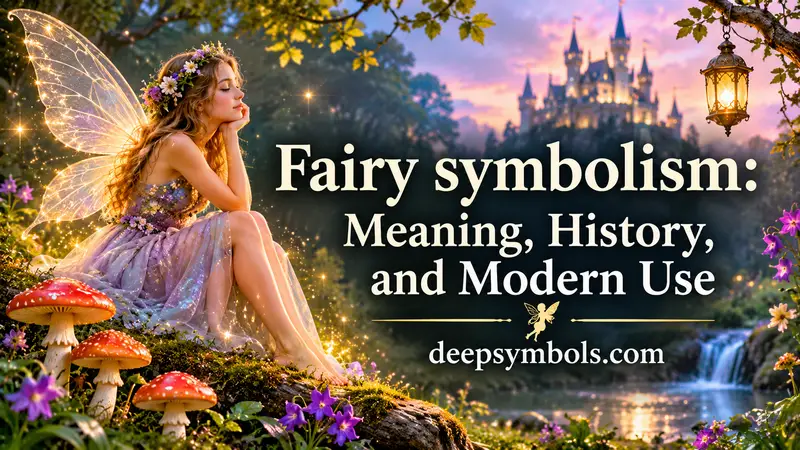
Fairies are among the most recognizable figures in folklore, often portrayed as small supernatural beings with wings, unusual abilities, and connections to nature. Fairy symbolism commonly brings together imagination, magic, freedom, transformation, and the possibility of something extraordinary existing beyond ordinary experience. From illustrated children’s books to fantasy films, garden decorations, and tattoos, fairies continue to capture the imagination of people across generations.
However, the traditional fairy is not always the delicate, friendly creature familiar from modern illustrations. European folklore includes fairies that are helpful, unpredictable, mischievous, dangerous, or morally ambiguous. Their behavior often reflects older beliefs about nature, the unseen world, human relationships, and the risks of entering unfamiliar places.
In the United States, fairies have become especially popular through children’s entertainment, fantasy literature, Halloween imagery, garden design, and contemporary spiritual aesthetics. Their meaning has expanded beyond traditional folklore to include individuality, feminine independence, creativity, and personal transformation. Understanding their history helps explain why fairies can represent both gentle wonder and the uncertain boundaries between the natural and supernatural worlds.
Quick Answer
Fairy symbolism commonly represents magic, imagination, transformation, freedom, and a connection with nature in modern American culture. Historically, fairies appeared in European folklore as supernatural beings associated with enchanted places, human fortune, mysterious encounters, protection, and sometimes danger.
TL;DR
- Fairies commonly represent magic, imagination, freedom, and transformation.
- European folklore portrays fairies as helpful, mischievous, and sometimes dangerous.
- Nature associations connect fairies with forests, flowers, gardens, and seasonal change.
- American popular culture often presents fairies as friendly fantasy characters.
- Fairy tattoos frequently express individuality, creativity, and personal freedom.
- Modern interpretations also explore feminine independence and spiritual connection.
1. What Fairies Look Like and Where They Appear
The familiar modern fairy is usually depicted as a small, human-like figure with delicate wings, pointed features, and an association with flowers or woodland settings. Illustrations often give fairies sparkling clothing, flowing hair, and graceful appearances. Some designs show them carrying tiny objects, sitting among flowers, or flying through gardens.
These images are particularly common in children’s books, animated entertainment, greeting cards, toys, and decorative products. In fantasy artwork, fairies may have elaborate wings, unusual colors, or appearances inspired by insects, plants, and other natural forms.
Traditional folklore, however, does not provide one consistent physical description. Some fairies were imagined as beautiful human-sized beings, while others appeared as tiny creatures, strange lights, shadowy figures, or mysterious neighbors living alongside humans.
The difference matters because the modern winged fairy is only one interpretation of a much older supernatural figure.
People encounter fairy imagery in several settings:
- Children’s literature and animated films.
- Fantasy novels, games, and television.
- Garden ornaments and nature-inspired decorations.
- Jewelry, clothing, and tattoo designs.
- Halloween costumes and seasonal displays.
- Contemporary spiritual and imaginative artwork.
The appearance of a fairy often influences its interpretation. A flower-covered figure may suggest gentleness and nature, while a dark woodland fairy may communicate mystery, independence, or the unpredictable side of folklore.
2. The Core Symbolic Meanings of Fairies
Fairies have accumulated several symbolic associations through folklore, literature, and modern entertainment.
Magic and wonder: Fairies are connected with extraordinary abilities and events that seem to exceed ordinary explanations. They represent imagination and the possibility of experiences beyond everyday expectations.
Freedom and independence: Their ability to fly and move between different worlds makes fairies natural symbols of freedom. Modern interpretations often connect them with individuality and resistance to social expectations.
Transformation and change: Fairies frequently appear in stories involving enchantment, altered appearances, unusual journeys, and unexpected outcomes. These narratives connect them with personal growth and changing circumstances.
Nature and the environment: Traditional fairy stories often place supernatural beings in forests, meadows, springs, hills, and other natural settings.
Creativity and imagination: Their association with fantasy makes fairies recognizable symbols of artistic expression, storytelling, and childhood wonder.
Mystery and uncertainty: Traditional fairies were not always trustworthy. Their unpredictable behavior can symbolize the risks of entering unfamiliar situations or ignoring boundaries.
These meanings are not interchangeable in every context. A fairy on a child’s birthday invitation may communicate playfulness, while a fairy in an older folktale may represent danger or an encounter with the unknown.
3. Ancient Roots and Early European Fairy Folklore
Fairy traditions developed gradually from different European beliefs, stories, and supernatural figures. There is no single ancient civilization or historical event that created the fairy as people recognize it today.
In medieval European literature and folklore, supernatural beings appeared in stories about enchanted landscapes, mysterious encounters, human relationships, and the boundaries between the living world and an unseen realm.
The word fairy developed through medieval French and related linguistic traditions, ultimately connecting with the Latin fatum, meaning fate. Earlier traditions also included beings associated with spirits, nature, ancestral presence, and supernatural forces.
Celtic folklore is particularly important in discussions of fairies. In Ireland, stories about the Aos Sí describe supernatural beings associated with ancient mounds and other places believed to connect the human world with an unseen community. These beings were not simply tiny winged creatures. They could be impressive, powerful, unpredictable, and deserving of respect.
Scottish traditions also developed extensive fairy lore, including accounts of fairy hills, unusual encounters, and beings that interacted with humans in complicated ways.
These traditions should not all be treated as identical. Irish, Scottish, Welsh, English, and other European communities developed distinct stories and beliefs. Their shared supernatural themes helped shape the broader fairy tradition, but each culture maintained its own local interpretations.
4. Fairies in Celtic and British Traditions
Celtic and British folklore contributed many of the stories that shaped modern ideas about fairies. However, traditional accounts often present these beings as more complicated than the friendly characters found in contemporary children’s entertainment.
In Irish folklore, the Aos Sí are supernatural beings associated with ancient mounds, hills, and places connected with the unseen world. They were sometimes approached with respect and caution because disturbing their dwelling places was believed to bring misfortune.
Scottish folklore includes different fairy communities and individual beings, including the Sìth traditions. Stories describe encounters involving music, dancing, unusual journeys, and the possibility of losing track of time.
English folklore contains accounts of mischievous household fairies, woodland creatures, and supernatural visitors. Some stories portray fairies as helpful, while others warn against accepting mysterious gifts or following unfamiliar lights.
Welsh traditions also contain supernatural beings connected with landscapes, hills, and human encounters.
An important feature of these traditions is the idea that fairies belong to a world with its own rules. Humans who respect boundaries may avoid trouble, while those who act carelessly can face unexpected consequences.
These older stories contribute to the fairy’s modern association with mystery, independence, and the unpredictable character of nature.
5. Fairies as Symbols of Nature and the Natural World
Fairies are frequently associated with natural environments, particularly forests, gardens, flowers, streams, and meadows. This connection developed partly because traditional stories often placed supernatural beings in landscapes that people considered unfamiliar, secluded, or difficult to understand.
A fairy sitting on a flower may suggest the delicate relationship between imagination and the natural world. A woodland fairy can represent the mystery of forests, while a water fairy may evoke the movement, beauty, and unpredictability of rivers and springs.
In contemporary American culture, these associations appear in fairy gardens, decorative landscapes, children’s play areas, and nature-inspired artwork.
Fairy gardens are especially popular as imaginative miniature environments. They may contain tiny houses, small bridges, miniature furniture, mushrooms, stones, and figurines. These arrangements turn ordinary gardening into a creative activity.
Fairy imagery also appears in environmental artwork. Artists sometimes use fairies to encourage appreciation for plants, insects, flowers, and woodland habitats.
However, the environmental interpretation is largely a modern extension of older folklore. Traditional fairies were not necessarily guardians of ecosystems in the contemporary environmental sense. Their connection with nature was often more complicated, involving respect, uncertainty, and supernatural danger.
Today, the fairy can represent a desire to protect natural beauty and maintain a sense of wonder about the environment.
6. Fairy Symbolism in Modern American Culture
In the United States, fairies are widely recognized through entertainment, children’s products, fantasy literature, and decorative culture.
Their modern image has been shaped by European folklore, Victorian illustrations, theatrical productions, and twentieth-century animation. Friendly winged fairies became particularly familiar through children’s storytelling and popular entertainment.
Disney’s Tinker Bell is one of the most recognizable examples. Originally associated with J. M. Barrie’s Peter Pan, the character became an important part of American popular culture through animated adaptations and later merchandise.
Modern American interpretations commonly connect fairies with:
- Childhood imagination and playful creativity.
- Freedom from ordinary limitations.
- Feminine identity and independence.
- Nature-inspired decoration and gardening.
- Fantasy, adventure, and transformation.
- Personal expression and individuality.
Fairies also appear in Halloween decorations, birthday celebrations, themed parties, and fantasy events. Their appearance can range from soft pastel designs to dark, dramatic woodland imagery.
Unlike some older European traditions, American popular culture generally presents fairies as approachable fictional characters rather than supernatural beings requiring caution.
This change reflects the influence of children’s entertainment and commercial storytelling. The modern fairy is often designed to inspire enjoyment, creativity, and emotional connection rather than fear.
7. Light, Wings, and Other Important Fairy Imagery
Different features associated with fairies contribute to their symbolic interpretation.
Wings: Wings commonly represent freedom, movement, independence, and the ability to move beyond ordinary boundaries. They also connect fairies with butterflies, moths, and other winged creatures.
Glowing light: Fairy lights and sparkling effects often communicate enchantment, discovery, and imagination. In traditional folklore, mysterious lights could also be associated with dangerous encounters or misleading paths.
Flowers: Floral imagery connects fairies with beauty, growth, seasonal change, and the natural environment.
Mushrooms: Fairy rings, formed by mushrooms growing in roughly circular patterns, have long been associated with fairy folklore in parts of Europe. Folktales sometimes described these circles as places where fairies gathered to dance.
Moonlight: Nighttime settings create an atmosphere of secrecy and uncertainty. Moonlight can suggest the boundary between the familiar world and the supernatural.
Tiny houses: Modern fairy houses represent imagination, hospitality, and the creation of small, welcoming spaces.
These features are not universal symbols with fixed meanings. Their interpretation depends on the artistic setting, cultural tradition, and story in which they appear.
8. The Emotional and Psychological Meaning of Fairies
Fairies often represent the human desire to experience wonder, creativity, and possibilities beyond ordinary routines.
For children, fairy stories can provide imaginative ways to explore courage, kindness, curiosity, and the difference between helpful and harmful behavior. Supernatural characters make abstract experiences easier to understand through memorable stories.
For adults, fairy imagery can communicate a desire to preserve imagination in a world dominated by responsibilities and practical concerns.
The fairy can also represent individuality. Its unusual appearance and independent behavior make it a useful image for people who feel different from their surroundings or prefer unconventional forms of self-expression.
There is also an emotional connection with childhood memories. Some adults associate fairies with bedtime stories, family traditions, toys, or favorite animated films. A fairy decoration may therefore represent nostalgia as much as fantasy.
Darker fairy imagery communicates a different emotional experience. An isolated figure in a shadowy forest may suggest independence, uncertainty, loneliness, or the attraction of the unknown.
These interpretations demonstrate that fairies are not limited to innocence and happiness. They can also provide a visual language for complex feelings about identity, change, and belonging.
9. Fairies in Literature, Mythology, and Popular Entertainment
Fairies have played an important role in European literature and modern fantasy storytelling.
One influential work is William Shakespeare’s A Midsummer Night’s Dream. Its fairy characters, including Oberon and Titania, inhabit a supernatural world where romantic confusion, enchantment, and theatrical mischief influence human relationships.
The play helped establish a literary tradition in which fairies could be entertaining, unpredictable, and closely connected with the natural world.
Another important figure is Tinker Bell from J. M. Barrie’s Peter Pan. Her character helped popularize the small, winged fairy in modern entertainment, although her personality is more complicated than the purely gentle image often associated with fairy illustrations.
Later fantasy literature expanded the possibilities. Fairies appeared as magical companions, powerful rulers, dangerous creatures, and members of complex supernatural societies.
In contemporary films, television, and video games, they may possess extraordinary abilities or exist within elaborate fantasy worlds.
Examples include:
- Peter Pan, which popularized Tinker Bell in American entertainment.
- A Midsummer Night’s Dream, which presents fairy royalty and supernatural mischief.
- The Fairy Tales of the Brothers Grimm, which helped preserve and circulate European folk narratives, including stories involving supernatural beings.
- Modern fantasy games and novels, which often portray fairies as independent magical communities.
The literary fairy has evolved from a figure of traditional folklore into a flexible character capable of representing innocence, danger, humor, power, and personal transformation.
10. Fairy Symbolism in Different Cultures
Although the modern fairy is strongly connected with European folklore, many cultures have supernatural beings that share certain characteristics with fairies. These figures should not automatically be treated as identical.
In Irish and Scottish traditions, fairies are associated with supernatural communities, ancient landscapes, and encounters between humans and the unseen world.
In English folklore, fairy stories include helpful household beings, woodland creatures, and supernatural visitors whose behavior may be unpredictable.
In Japanese folklore, yōsei is sometimes used as a broad translation for fairy, but Japanese supernatural traditions include many distinct beings that do not have direct European equivalents. The kodama, for example, are spirits associated with trees and forests.
In Scandinavian folklore, the huldra and other hidden folk traditions involve supernatural beings associated with rural landscapes and human encounters. Their characteristics differ from the familiar winged fairy.
In South Asian traditions, supernatural beings such as pari appear in Persian-influenced and regional storytelling. They are sometimes portrayed as beautiful supernatural figures, although their cultural and religious contexts differ from European fairy traditions.
These comparisons reveal a shared human interest in supernatural beings associated with nature, beauty, hidden places, and the boundaries between ordinary and extraordinary experience.
They should not erase cultural distinctions. Each tradition has its own history, language, and beliefs.
11. Fairies and Their Connection With Feminine Identity
Modern fairy imagery is often associated with feminine beauty, creativity, independence, and self-expression.
This association partly reflects the popularity of female fairy characters in children’s entertainment, illustrated books, and fantasy films. Their wings, clothing, and connection with nature have also influenced fashion and decorative art.
For some women, fairy imagery offers a way to express individuality without following conventional expectations. A fairy tattoo, necklace, or illustration may communicate creativity, personal freedom, or an interest in fantasy.
However, fairies are not exclusively female. Traditional folklore includes male and female supernatural beings, and modern fantasy stories feature fairy characters with a wide range of identities and personalities.
It is also important to recognize that older folklore did not always portray female fairies as gentle or powerless. Some were independent, formidable, and capable of influencing human lives.
Modern interpretations can therefore move beyond the delicate, decorative fairy and recognize the figure as an expression of autonomy, complexity, and personal identity.
12. Why People Choose Fairy Tattoos and Jewelry
Fairy tattoos and jewelry are popular among people who connect with fantasy, nature, creativity, or personal independence.
A small fairy tattoo may represent childhood memories, imagination, or a desire to maintain a playful outlook on life. Larger designs may communicate individuality, transformation, or an appreciation for traditional folklore.
The details often influence the intended meaning.
| Fairy design | Common symbolic meaning | Personal association |
|---|---|---|
| Fairy with wings | Freedom and independence | Living beyond limitations |
| Fairy with flowers | Nature and beauty | Appreciation for the natural world |
| Dark fairy | Mystery and individuality | Accepting an unconventional identity |
| Fairy with a moon | Imagination and change | Personal growth and new beginnings |
| Fairy with a butterfly | Transformation and freedom | Moving through a major life change |
Fairy jewelry offers similar possibilities. Pendants, earrings, bracelets, and rings may feature wings, flowers, stars, or miniature fairy figures.
Some people choose these designs because they enjoy fantasy artwork, while others associate them with a meaningful personal experience.
There is no universal meaning attached to a fairy tattoo. Its significance ultimately depends on the person wearing it and the story behind the design.
13. Fairy Gardens and Home Decoration
Fairy gardens have become a popular form of creative gardening, particularly among people who enjoy miniature landscapes and imaginative decoration.
A typical fairy garden includes small houses, decorative pathways, miniature plants, stones, mushrooms, and tiny figurines. Some designs are placed in flower beds, while others use containers, wooden boxes, or indoor planters.
The symbolism of these gardens centers on creativity, hospitality, imagination, and appreciation for nature.
For families, creating a fairy garden can become a shared activity that encourages children to observe plants and develop imaginative stories. Adults may use them as decorative features or as a relaxing creative hobby.
Fairy imagery also appears in bedrooms, nurseries, outdoor seating areas, and seasonal home decorations.
Soft colors and floral details often create a gentle atmosphere, while woodland designs may use darker greens, natural wood, and earthy textures.
These modern decorative uses are not necessarily connected with literal beliefs in fairies. For many Americans, they simply provide an enjoyable way to combine gardening and fantasy.
14. Controversies and Misunderstandings About Fairies
Fairies have sometimes been misunderstood because modern entertainment presents a much simpler image than traditional folklore.
One common misconception is that all fairies are small, beautiful, winged, and friendly. Historical stories include beings that were human-sized, frightening, unpredictable, or capable of harming people.
Another misunderstanding is that every fairy tradition comes from Celtic mythology. Celtic folklore is important, but fairy beliefs developed across several European communities and were influenced by different religious, literary, and local traditions.
Fairies are also sometimes confused with angels. Although both may be depicted with wings in modern artwork, they come from different religious and cultural traditions. Angels have specific roles in Jewish, Christian, and Islamic theology, while fairies belong primarily to folklore and fantasy traditions.
Some contemporary spiritual practices incorporate fairies into beliefs about nature spirits or unseen beings. These interpretations vary widely and should not be presented as universal historical or religious teachings.
Commercial imagery has also simplified fairy traditions. Products frequently use fairies as symbols of sweetness, innocence, and decoration, leaving out the more complicated elements of older stories.
Understanding these distinctions allows readers to appreciate fairies as cultural figures without confusing folklore, religion, personal spirituality, and entertainment.
15. How Fairy Meanings Have Changed Over Time
The fairy has undergone significant changes as storytelling and cultural attitudes have evolved.
In older European folklore, fairies were often associated with mysterious landscapes, supernatural encounters, human fortune, and the possibility of danger. Their behavior could be helpful or harmful, depending on the story.
Medieval and Renaissance literature developed more elaborate fairy characters. Writers used them to explore love, power, deception, human weakness, and the relationship between nature and society.
During the Victorian period, fairy imagery increasingly became associated with delicate beauty, flowers, small wings, and childhood imagination. Illustrations and decorative art helped establish the familiar visual appearance of fairies.
Twentieth-century children’s entertainment strengthened the friendly and magical interpretation. Animation, toys, books, and films introduced fairies to generations of American children.
In the twenty-first century, fairy imagery has expanded again. Dark fantasy, alternative fashion, social media aesthetics, and contemporary artwork have revived interest in more unusual and independent fairy characters.
Today, fairies can represent innocence, rebellion, imagination, femininity, nature, nostalgia, or mystery. Their changing meanings reflect the ability of folklore figures to adapt to the concerns and interests of different generations.
FAQs
1. What does a fairy symbolize spiritually?
A fairy can symbolize imagination, transformation, nature, freedom, and a connection with the unseen world in contemporary spiritual interpretations. However, these meanings come from different folklore and personal belief systems rather than one universal religious teaching.
2. Are fairies a symbol of good luck?
Fairies are sometimes associated with good fortune, helpful encounters, and protection in popular stories. Traditional European folklore is more complicated, however, because fairies could also be unpredictable or bring misfortune.
3. What does a fairy tattoo symbolize?
A fairy tattoo commonly represents freedom, creativity, individuality, and a connection with fantasy or nature. Some people also choose fairy designs to celebrate childhood memories or mark a personal period of transformation.
4. What do fairies symbolize in Celtic folklore?
In Celtic traditions, fairies are associated with supernatural communities, enchanted landscapes, and the boundary between human and unseen worlds. They are not always friendly creatures and are often treated with respect and caution.
5. Are fairies associated with nature?
Yes. Traditional fairy stories frequently place supernatural beings in forests, hills, springs, meadows, and other natural settings. Modern fairy imagery often extends this connection to environmental appreciation, gardening, and the protection of natural beauty.
6. What does a dark fairy symbolize?
A dark fairy may represent mystery, independence, unconventional beauty, and the unpredictable aspects of human nature. In modern fantasy and tattoo culture, the design can also communicate individuality and a willingness to embrace a less traditional identity.
7. Are fairies and angels the same?
No. Fairies belong primarily to European folklore and fantasy traditions, while angels are supernatural beings with defined roles in major religious traditions. Their occasional visual similarities, particularly the use of wings, do not make them equivalent.
Conclusion
Fairy symbolism brings together imagination, magic, freedom, nature, individuality, and personal transformation. Rooted in European folklore, fairies were once portrayed as unpredictable supernatural beings capable of both helping and harming humans. The scholarly collection The Exeter Companion to Fairies, Nereids, Trolls and Other Social Supernatural Beings explores how different European communities understood these mysterious figures through their own folklore, legends, and cultural beliefs.
In modern American culture, fairies are more commonly associated with creativity, childhood wonder, fantasy, and a connection with nature. They appear in literature, films, gardens, tattoos, jewelry, and decorative art, where their meanings may suggest freedom, independence, beauty, or individuality. These contemporary interpretations reflect changing cultural attitudes rather than one universal ancient tradition.
Ultimately, fairy symbolism reminds us that imagination can help people explore experiences that ordinary explanations cannot always capture. Fairies represent both the beauty and unpredictability of the unknown, encouraging curiosity while reminding us that nature and life do not always follow familiar rules. Their lasting appeal comes from their ability to connect wonder with uncertainty, showing how stories about the supernatural can reveal deeply human desires for freedom, possibility, and discovery.


